Supplement Stack Checklist — How to Build a Safe Routine That Actually Works
supplement stack checklist is one of the most useful searches someone can make before buying another supplement, because it usually means they are ready to act but unsure what is safe, worthwhile, or right for them. This guide gives you the practical, evidence-aware version: what matters, what to check first, what to avoid, and when a paid guide or tracker can save you from expensive guesswork.
The mistake most people make is starting with products instead of problems. A useful supplement stack starts with your goal, your diet, your symptoms, your blood work, your medications, and your budget. Otherwise your bathroom shelf becomes a tiny museum of good intentions.
Track what is actually working.
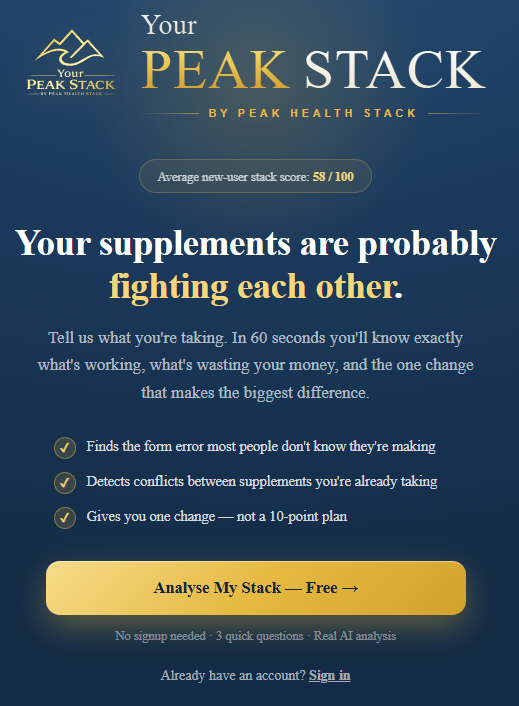
Your Peak Stack helps you log your supplements, timing, dose and daily symptoms so you can spot what helps, what clashes, and what may be wasted spend.

Stop Guessing. Start Tracking What Works.
Your Peak Stack helps you log your supplements, track how you actually feel, and get AI-powered guidance on what’s helping, what may be clashing, and what to adjust next.
Step 1: Decide What Problem You Are Actually Solving
Before you buy anything, write down the exact problem you want to improve. “Be healthier” is too vague. “Improve winter vitamin D status”, “support sleep quality”, “raise low ferritin”, “hit my protein target”, or “reduce supplement spend” gives you something measurable.
The best supplement stack is usually boring at first. That is good. Boring means you are choosing nutrients with a clear reason, not chasing whichever ingredient is currently wearing the internet’s sparkly hat.
- Energy: check sleep, protein, iron, B12, vitamin D and thyroid patterns before stimulants.
- Sleep: check caffeine timing, alcohol, stress load, light exposure and magnesium status before complex sleep blends.
- Women over 40: consider iron, vitamin D, B12, magnesium, protein intake and perimenopause-related changes.
- Training: protein, creatine, vitamin D, omega-3 and magnesium cover more ground than most advanced stacks.
Step 2: Test the Nutrients That Are Worth Testing
Some supplements are best chosen after a blood test. Iron is the clearest example. Low ferritin can drive fatigue, breathlessness, hair shedding and poor exercise tolerance, but taking iron when you do not need it is not a clever shortcut. It can cause side effects and, in some cases, harm.
Vitamin D and B12 are also sensible to check, especially in Ireland and the UK where sunlight is limited for much of the year, or if you eat little animal food. Testing turns supplement shopping from guesswork into a map.
Step 3: Start With the Smallest Effective Stack
A strong beginner stack for many adults is not ten products. It is a few high-relevance choices used consistently for 8 to 12 weeks. Consistency is the unglamorous engine room. If you take magnesium three nights, forget it for a week, restart, switch brand, then add ashwagandha, you cannot tell what helped.
Use a simple rule: add one new supplement at a time unless a clinician has advised a full protocol. Give each addition long enough to judge. Track dose, timing, symptoms and side effects.
- One change at a time where possible.
- Keep the dose boring and sensible.
- Use the right form, not just the biggest milligram number.
- Track sleep, energy, digestion, mood and training for at least 2 weeks.
- Stop anything that clearly causes side effects and ask a professional if symptoms are significant.
Step 4: Check for Clashes Before You Add More
Supplement clashes are not rare little goblins hiding in academic footnotes. They are ordinary, practical problems. Iron competes with calcium and magnesium. Zinc and copper need balance. High-dose vitamin D without monitoring can be risky. Herbal supplements can interact with medication.
This is where people lose trust in supplements unfairly. The issue is often not that supplements “do not work”. It is that the stack was built like a junk drawer.
A supplement stack should be simple enough that you know what each item is for, when you take it, and what result would make you continue or stop.
The 5-Minute Supplement Stack Checklist
Use this before buying anything new. If a supplement fails more than two of these checks, it probably belongs on your “maybe later” list.
- Do I know the exact reason I am taking it?
- Is there a deficiency, symptom, goal or evidence-based use case?
- Is the dose within normal safe ranges?
- Have I checked medication, pregnancy, breastfeeding and medical condition warnings?
- Do I know when to take it and what to avoid taking it with?
- Will I track results for at least 2 to 8 weeks?
- Is this replacing a better first step like sleep, protein, sunlight, training or blood work?
Need the full step-by-step version?
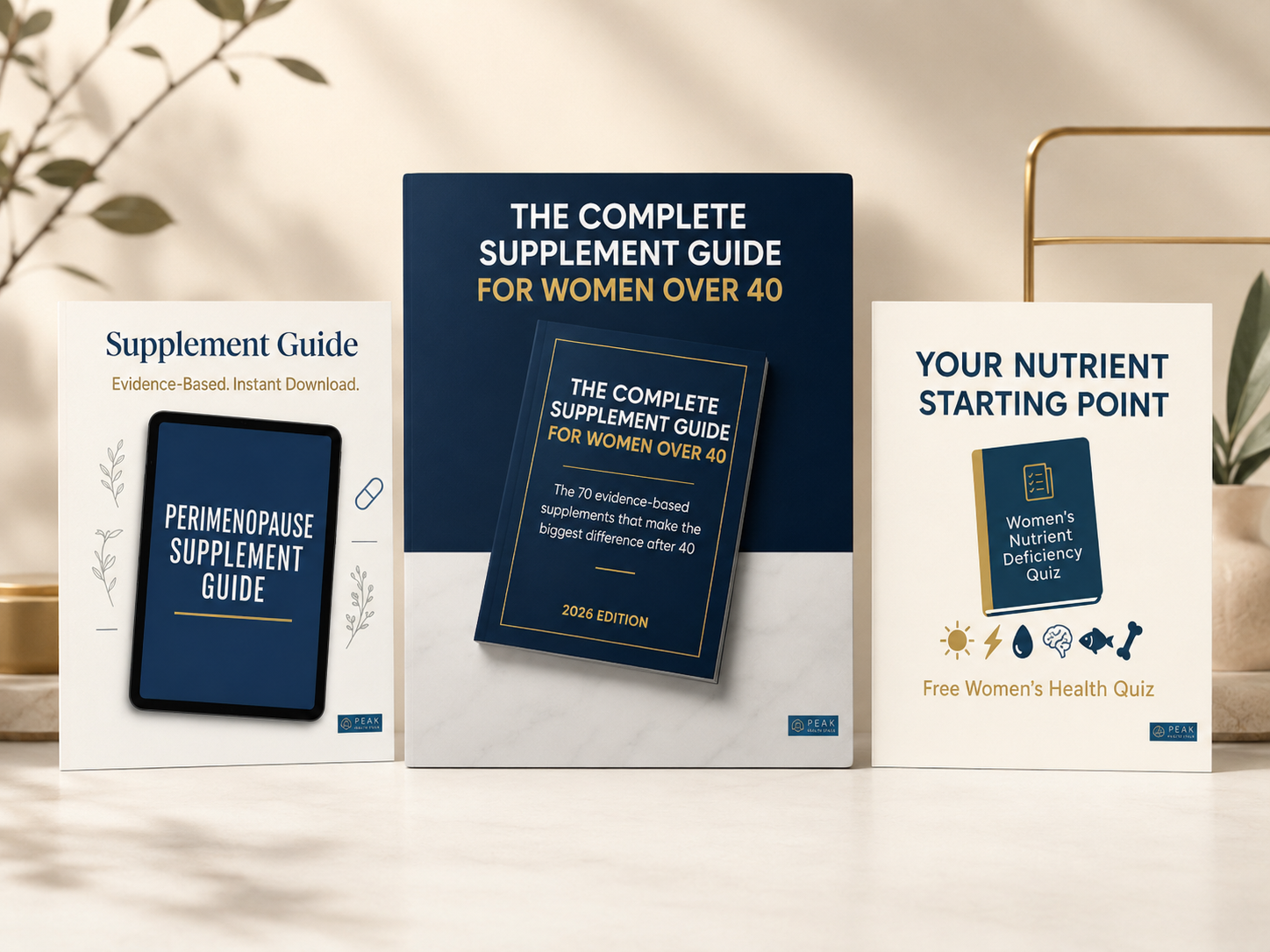
Browse all Peak Health Stack guides for practical checklists, supplement timing plans, women’s health resources and evidence-based workbooks.
Evidence-Based Health Guides
Practical Health Guides for Smarter Supplement Choices
Browse evidence-based guides, workbooks and free resources for supplement timing, forms, nutrient gaps, women’s health, energy and everyday performance.
Frequently Asked Questions
How many supplements should be in a stack?
For most people, fewer than five core supplements is enough at the beginning. More can be useful, but only when each one has a job and you can track whether it is helping.
Should I take supplements every day?
Some supplements are designed for daily consistency, such as vitamin D, creatine or magnesium. Others depend on need, dose and context. Follow product guidance and professional advice where relevant.
What is the safest first supplement stack?
A common evidence-aware foundation is vitamin D if levels or sunlight suggest need, magnesium glycinate if sleep or stress support is relevant, omega-3 if oily fish intake is low, protein if intake is low, and creatine if training. Personal context matters.
Final Thought
The best supplement stack is not the biggest. It is the one you can explain, afford, tolerate and track. Start with the problem, check the obvious gaps, add slowly, and let your results decide what stays.
Build your health stack with less guesswork.
Visit the Peak Health Stack store for guides, workbooks and free resources built to help you choose better, track better and avoid wasting money.
Health note: this article is educational and is not medical advice. Speak with your GP, pharmacist, dietitian, or relevant clinician before starting supplements if you are pregnant, breastfeeding, taking medication, managing a condition, or considering iron, high-dose vitamin D, hormonal support, or multiple supplements at once.
Stop Guessing Which Supplements Are Actually Working.
Your Peak Stack helps you log your supplements, track how you feel, and get AI-powered guidance on what is helping, what may be clashing, and what to adjust next.