Creatine for Women Over 40 — Benefits, Dose, Safety and What to Expect
Creatine for women over 40 is one of the highest-value supplement topics hiding in plain sight. It is usually marketed to young men chasing bigger lifts, but the more interesting use case may be women who want to protect muscle, strength, energy, training quality, and long-term independence through perimenopause, menopause, and beyond.
This does not mean creatine is a hormone treatment, a fat burner, or a miracle powder. It means creatine monohydrate is cheap, well-studied, and directly relevant to the muscle and performance problems that become more important after 40.
Why Creatine Matters More After 40
From midlife onwards, muscle becomes a health asset, not just a fitness goal. Strength supports metabolism, bone health, glucose handling, joint resilience, posture, and the ability to keep doing normal life without negotiating with every staircase. Perimenopause and menopause can also make training recovery, body composition, sleep, and energy feel more unpredictable.
Creatine helps your muscles regenerate ATP during high-intensity effort. In practical terms, that may mean better reps, better sprint efforts, better gym performance, and more training volume over time. More useful training can then support muscle and strength.
Creatine Benefits for Women Over 40
| Potential benefit | What it means in real life | What it does not mean |
|---|---|---|
| Strength support | May help you perform more reps or maintain power. | It will not build muscle without training. |
| Muscle preservation | Useful during dieting, ageing, or inconsistent training periods. | It does not replace protein. |
| Training recovery | May support repeated high-intensity efforts. | It is not a cure for poor sleep. |
| Cognitive interest | Research is developing around brain energy demands. | It is not proven as a memory cure. |
| Bone-health support indirectly | Better resistance training supports bone loading. | Creatine alone is not a bone supplement. |
Will Creatine Make Women Bulky?
No. Creatine does not override your biology and inflate you into a competition bodybuilder by Thursday. It may increase water stored inside muscle cells, which can slightly increase scale weight. That is not fat gain. For many women, that small increase comes with better training performance and fuller-looking muscle.
Best Creatine Form for Women Over 40
Choose creatine monohydrate. Not creatine HCL, not buffered creatine, not a glittery “female toning creatine complex”. Creatine monohydrate is the reference form used in most research, and it is usually the cheapest. Look for a plain powder or capsules from a reputable brand. Third-party testing is a bonus, especially if you compete in sport.
Creatine Dose for Women Over 40
The simple dose is 3 to 5g daily. You do not need a loading phase. Loading works faster, but it also increases the chance of bloating or digestive grumbling. For most people, daily consistency is the whole game.
| Goal | Dose | Timing |
|---|---|---|
| General strength and training support | 3 to 5g daily | Any time you remember |
| Sensitive stomach | 3g daily | With food |
| Faster saturation | Optional loading, but not necessary | Only if you tolerate it well |
Creatine, Protein and Strength Training: The Real Stack
Creatine works best when the rest of the stack is not a shambles. For women over 40, the real foundation is resistance training, enough protein, vitamin D if low, magnesium if intake is poor or sleep is an issue, and creatine for performance support. That is not glamorous, but it is powerful.
If you only take creatine but do not train, the result will be limited. If you train but under-eat protein, progress will be slower. If you train, eat enough protein, and take creatine consistently, now the little powder has a proper job.
Side Effects and Who Should Be Careful
- Some people notice mild bloating or stomach discomfort, especially with large doses.
- Scale weight may rise slightly due to water stored in muscle.
- People with kidney disease or medical restrictions should speak with their clinician before using creatine.
- If pregnant, breastfeeding, or trying to conceive, ask your healthcare professional first.
Track whether creatine is actually helping
Use Your Peak Stack to log creatine, training, sleep, energy, recovery, mood, and body changes so you can tell whether it earns its place.

Stop Guessing. Start Tracking What Works.
Your Peak Stack helps you log your supplements, track how you actually feel, and get AI-powered guidance on what’s helping, what may be clashing, and what to adjust next.

See all our resources for Women, including our Free Perimenopause Guide
Women’s Health Guides
Not Sure Which Supplements Actually Matter?
Start with our evidence-based women’s guides and free nutrient quiz. Built for energy, hormones, sleep, bones and everyday health after 40.
Explore Women’s Guides →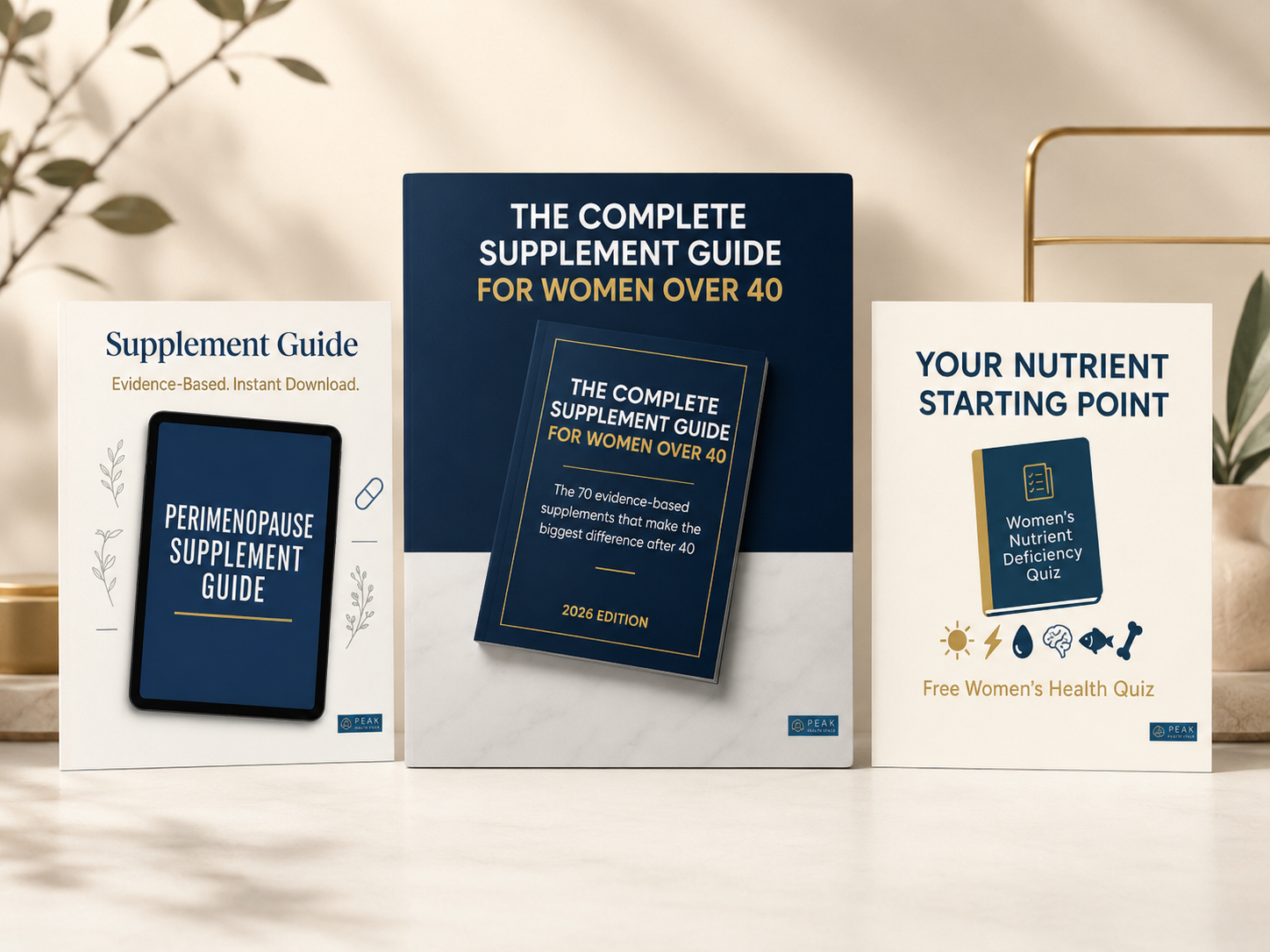
Creatine for Women Over 40: FAQ
Is creatine safe for women over 40?
For healthy adults, creatine monohydrate is generally considered one of the better-studied sports supplements. Anyone with kidney disease, complex medical history, pregnancy, breastfeeding, or regular medication concerns should check with a clinician first.
Does creatine help with menopause weight gain?
Creatine is not a weight-loss supplement. It may support training performance and muscle maintenance, which can indirectly support body composition when paired with resistance training and adequate protein.
Should I take creatine every day?
Yes. Daily consistency matters more than workout timing. Take 3 to 5g daily, with food if your stomach prefers it.
Can I take creatine with magnesium or protein powder?
Yes, for most people. Creatine combines well with protein powder and can sit alongside a basic magnesium routine. Check with a professional if you take medication or have kidney concerns.
Related Guides on Peak Health Stack
- Does Creatine Actually Work? The Honest, Evidence-Based Answer
- Creatine Loading Phase — Is It Necessary or Just Marketing?
- Best Supplements for Women Over 40 — What Changes and What Helps
- How Much Protein Do You Actually Need? The Evidence-Based Answer
Medical note: this article is educational and should not replace medical advice, especially if you have kidney disease, are pregnant or breastfeeding, or take regular medication.
Sources and Further Reading
- NIH Office of Dietary Supplements: Dietary supplement fact sheets
- Peak Health Stack: Does creatine actually work?
Stop Guessing Which Supplements Are Actually Working.
Your Peak Stack helps you log your supplements, track how you feel, and get AI-powered guidance on what is helping, what may be clashing, and what to adjust next.