Best Supplements for Women Over 40 — What Changes and What Helps
The best supplements for women over 40 address specific physiological changes that accelerate in this decade — not a generic women’s health formula. From the early 40s, oestrogen begins fluctuating, cortisol management becomes harder, bone density accelerates its decline, and absorption efficiency for several critical nutrients decreases. Getting targeted supplementation right during this decade produces benefits that extend across the following decades of health. Getting it wrong means expensive products with no measurable impact.
What Changes After 40 for Women — best supplements for women over 40
The physiological context matters before discussing specific supplements. Perimenopause typically begins in the early to mid-40s — oestrogen levels start fluctuating before eventually declining more steeply toward menopause. Oestrogen plays a role in calcium absorption, iron metabolism, cardiovascular protection, cognitive function, and collagen synthesis — its fluctuation creates specific vulnerabilities in each of these areas. Simultaneously, gastric acid production continues declining (impairing mineral absorption), muscle mass begins its accelerated decline, and chronic low-grade inflammation increases. Each of these has specific supplementation responses.
Vitamin D3 + K2 — The Bone Protection Window — best supplements for women over 40
Bone density peaks in the late 20s and then slowly declines, accelerating to 2-3% per year in the years surrounding menopause. The decade of the 40s is the critical intervention window — proactive supplementation of vitamin D3 and K2 during this period has measurable long-term bone density benefits that become progressively harder to achieve once significant bone loss has occurred. Vitamin D3 + K2 at 2,000-4,000 IU daily with a fat-containing meal addresses the high prevalence of deficiency in northern climates and directly supports bone mineralisation. Get tested — confirmed deficiency justifies the higher dose range.
The best supplements for women over 40 are driven by the specific physiological changes of this decade, not generic women’s health marketing.
PHS VERIFIED PICK
Nutricost Vitamin D3 + K2
WHY WE PICKED THIS:
Evidence Score: 4.5/5 | 31 RCTs
Typically £12-16 · 120 capsules · 4-month supply at 1 per day
We earn a small commission on this link. It never affects which products we recommend.
Magnesium Glycinate — Sleep, PMS, Anxiety and Bone
Magnesium is the single most broadly useful supplement for women in their 40s. It addresses four of the most common concerns of this decade simultaneously: sleep disruption (magnesium activates GABA receptors that drive sleep onset and depth); mood and anxiety (magnesium deficiency amplifies HPA axis stress reactivity); PMS symptoms including bloating, cramping, and mood changes (multiple RCTs show significant reduction); and bone mineralisation (magnesium is a structural component of bone crystal and a cofactor in vitamin D activation). Magnesium glycinate at 300-400mg before bed is the recommended form — the glycine component adds calming properties and the chelate form avoids the digestive issues common with magnesium oxide.
PHS VERIFIED PICK
Thorne Magnesium Bisglycinate
WHY WE PICKED THIS:
Evidence Score: 4.2/5 | 23 RCTs
Typically £12-16 · 120 capsules · 2-month supply
We earn a small commission on this link. It never affects which products we recommend.
Omega-3 (EPA + DHA) — Cardiovascular, Mood, Joints
Cardiovascular disease risk increases substantially in the perimenopausal years as oestrogen’s cardioprotective effects begin waning. Establishing omega-3 supplementation in the 40s builds protection at the right time. Beyond cardiovascular health, EPA’s anti-inflammatory effects reduce joint stiffness and pain (increasingly common in perimenopause as oestrogen’s anti-inflammatory role reduces), and DHA supports cognitive function and mood stability during the brain fog and mood instability that oestrogen fluctuation (NHS menopause and perimenopause guidance)s produce. Omega-3 at 1,000-2,000mg EPA+DHA daily with food is appropriate for virtually all women in this age group as a dietary gap-filler.
Getting the best supplements for women over 40 right during this decade delivers benefits that extend into the following decades of health.
PHS VERIFIED PICK
Nordic Naturals Ultimate Omega-3
WHY WE PICKED THIS:
Evidence Score: 4.3/5 | 27 RCTs on cardiovascular health + depression in women
Typically £22-28 · 60capsules · (30 days at 2 caps/day)
We earn a small commission on this link. It never affects which products we recommend.
Iron — Test Before Acting Either Way
The perimenopause transition often brings irregular and heavier periods before eventually resolving into post-menopausal lighter or absent bleeding. This means iron status varies significantly between individual women in their 40s — some are iron-depleted from heavy periods, others are accumulating iron as periods become lighter. A ferritin blood test determines the correct action. Symptoms of low ferritin (fatigue, brain fog, hair thinning, cold sensitivity) are common and often misattributed to perimenopause itself — correcting iron deficiency where confirmed with iron bisglycinate often produces rapid, dramatic improvement in these symptoms.
PHS VERIFIED PICK
Thorne Iron Bisglycinate
WHY WE PICKED THIS:
Evidence Score: 4.1/5 | 19 RCTs
Typically £12–18 · 60 capsules · 2-month supply
We earn a small commission on this link. It never affects which products we recommend.
Collagen Peptides — Skin, Joints, Connective Tissue
Collagen production declines at approximately 1% per year from the mid-20s, and this decline accelerates significantly post-menopause due to oestrogen’s role in collagen synthesis. The visible signs — skin changes, joint stiffness, reduced skin elasticity — are driven partly by this collagen decline. Hydrolysed collagen peptides at 5-10g daily have genuine RCT evidence for improved skin elasticity and hydration and reduced joint pain at 8-12 weeks. Marine collagen peptides at 10g daily with vitamin C provides both the therapeutic dose and the synthesis cofactor. Myprotein Collagen Protein is a cost-effective alternative for daily supplementation.
PHS VERIFIED PICK
Vital Proteins Collagen Peptides
WHY WE PICKED THIS:
Evidence Score: 3.8/5 | 18 RCTs on collagen peptides for women 40+
Typically £24-32 · 120 capsules · 20 servings (20 days)
We earn a small commission on this link. It never affects which products we recommend.
Perimenopause-Specific Support
For women experiencing significant perimenopausal symptoms — hot flushes, severe sleep disruption, significant mood changes — a targeted perimenopause supplement blend incorporating ashwagandha KSM-66, soy isoflavones, and targeted vitamin support provides multi-symptom coverage in a single product. Ashwagandha KSM-66 specifically has strong evidence for cortisol reduction, sleep improvement, and modest thyroid support — all relevant to perimenopause physiology.
The best supplements for women over 40 address four priorities simultaneously: bone protection, hormonal support, cardiovascular health, and energy.
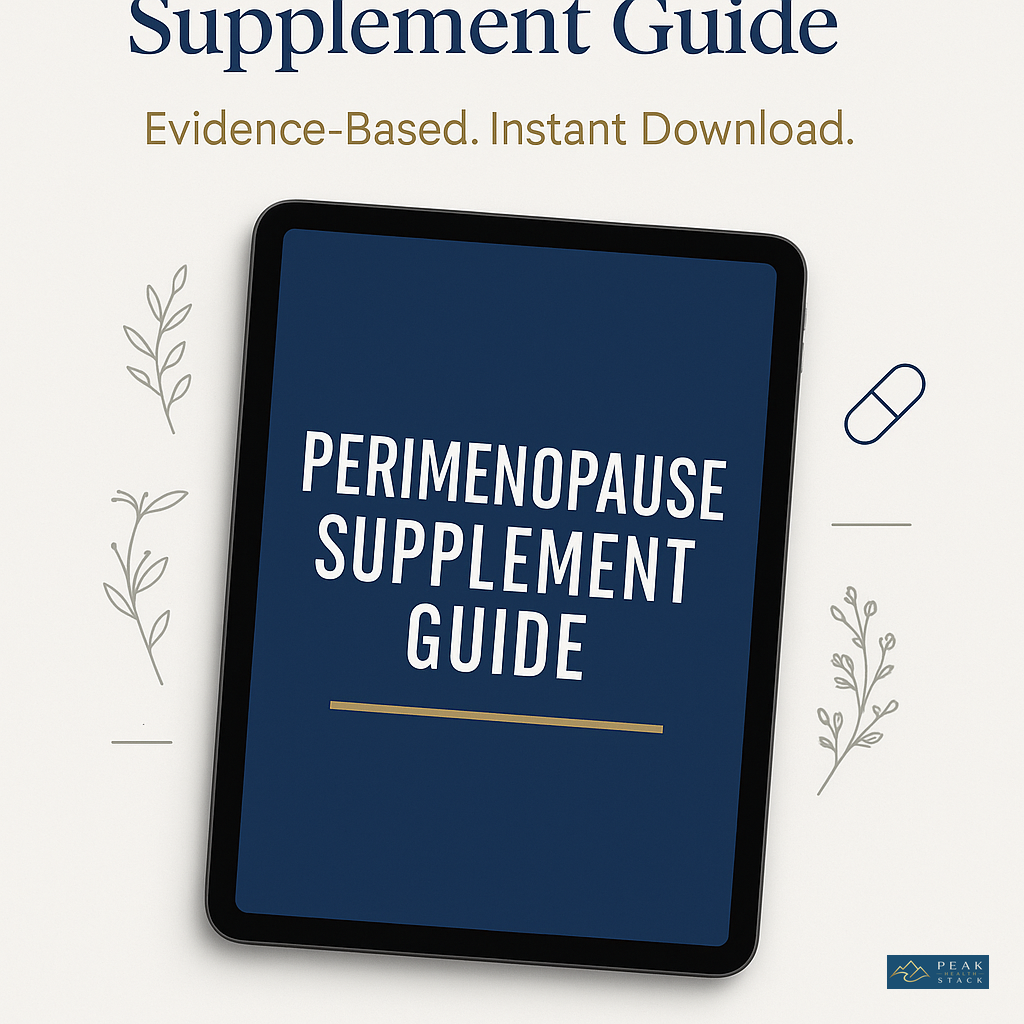
Perimenopause Supplements Without the Guesswork
A free evidence-based guide to help you understand which supplements may actually matter for energy, sleep, hormones, bones and wellbeing.
Frequently Asked Questions
Do women over 40 need a multivitamin?
A women’s over-40 multivitamin provides a nutritional baseline but typically under-doses the most critical nutrients (vitamin D at 400 IU rather than 2,000-4,000 IU; B12 as cyanocobalamin rather than methylcobalamin) and cannot replace targeted supplementation of confirmed deficiencies. A multivitamin as a foundation plus specific additional supplements for identified needs is more effective than relying on a multivitamin alone. A quality women’s multivitamin covers nutritional bases while targeted additions address specific concerns.
What supplements help with perimenopausal weight gain?
The weight redistribution of perimenopause (toward abdominal fat) is primarily hormonal — driven by declining oestrogen rather than caloric intake change. Supplements that help address the underlying mechanisms: magnesium (reduces cortisol that drives abdominal fat accumulation), omega-3 (improves insulin sensitivity), and protein supplementation (preserves muscle mass that drives metabolic rate). There is no supplement that directly reverses hormonal weight redistribution — resistance training is the most effective intervention.
Is HRT better than supplements for perimenopause?
For significant symptoms (frequent hot flushes, severe sleep disruption, significant mood changes impacting quality of life): yes, HRT is substantially more effective than any supplement combination. Supplements address specific nutritional vulnerabilities and provide modest symptom support — they cannot replicate hormonal replacement. They are most appropriate for women who cannot use HRT, prefer not to, or whose symptoms are mild. Discuss HRT eligibility with your GP if symptoms are significantly impacting daily function.
How long before supplements make a difference in your 40s?
Magnesium sleep effects: 1-2 weeks. Vitamin D energy and mood: 4-8 weeks. Iron correction of fatigue (if deficient): 4-8 weeks. Omega-3 mood and joint effects: 4-8 weeks. Collagen skin and joint benefits: 8-12 weeks minimum. Bone density effects from D3 + K2 + calcium: measurable at 12+ months. Give each supplement a full 8-week trial before evaluating effectiveness.
The Over-40 Supplement Stack for Women
Test ferritin and vitamin D first. Then build: vitamin D3 + K2, magnesium glycinate, omega-3, and collagen peptides as the evidence-based core. Add iron if ferritin is low. Consider a perimenopause blend if symptoms are significant. Skip supplements targeting symptoms that HRT addresses more effectively — and have that conversation with your GP. For more evidence-based women’s health guides, visit peakhealthstack.com.
Women’s Health Guides
Not Sure Which Supplements Actually Matter?
Start with our evidence-based women’s guides and free nutrient quiz. Built for energy, hormones, sleep, bones and everyday health after 40.
Explore Women’s Guides →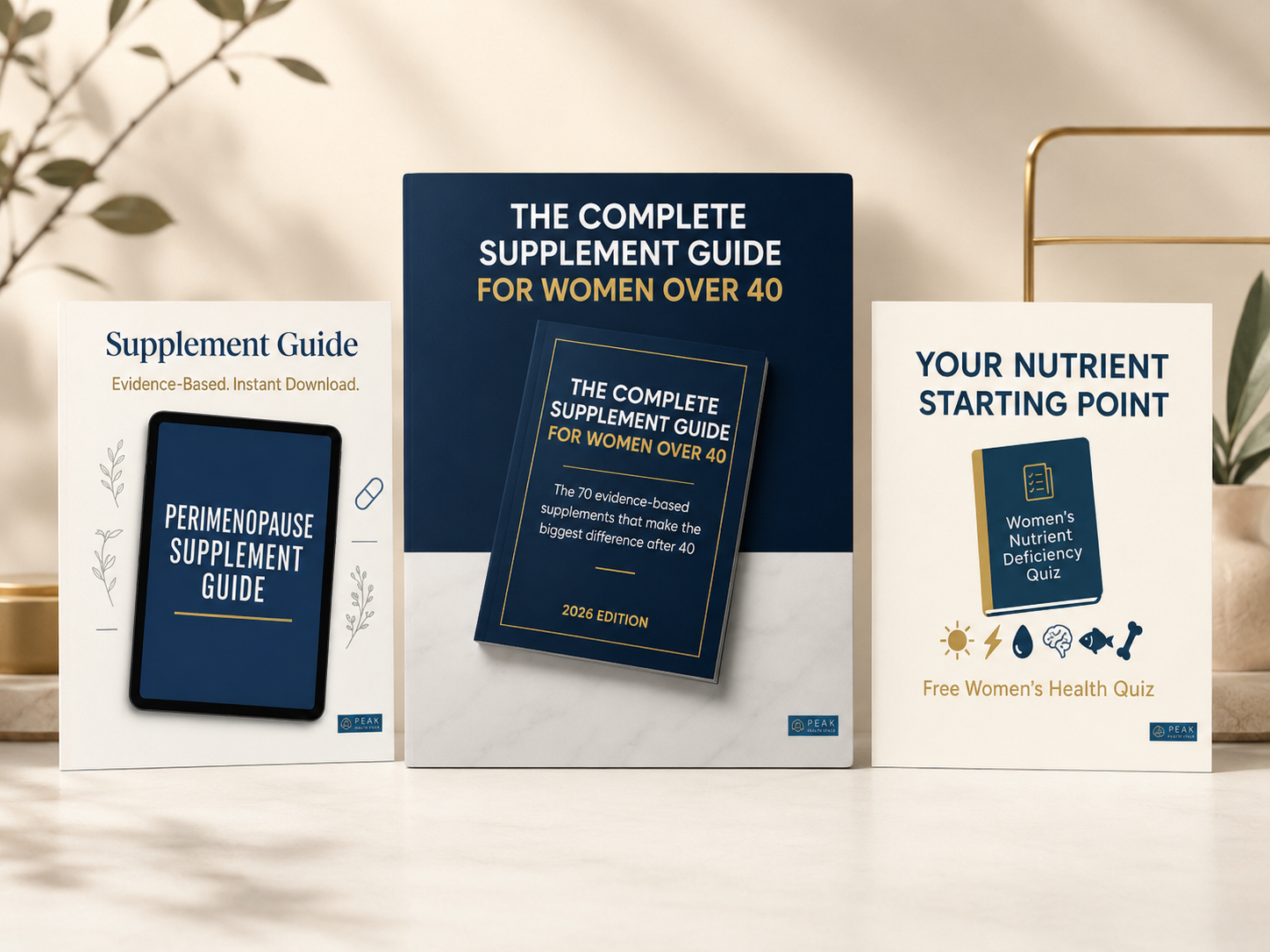
Related Guides on Peak Health Stack
- Best Supplements for Perimenopause
- Best Supplements for Women’s Bone Health
- Best Vitamins for Women
- Best Supplements for Over 50

Stop Guessing Which Supplements Are Actually Working.
Your Peak Stack helps you log your supplements, track how you feel, and get AI-powered guidance on what is helping, what may be clashing, and what to adjust next.