Does Magnesium Help Anxiety? — What the Evidence Shows
Does magnesium help anxiety? The evidence says yes — but with important nuance about who benefits, which form produces results, and what realistic expectations should look like. Magnesium is not an anti-anxiety drug, and its effects are not comparable to pharmaceutical anxiolytics. But it addresses a genuine physiological mechanism that contributes to anxiety in a significant proportion of the population, and its safety profile and broad availability make it one of the most reasonable first-line nutritional interventions to explore before more intensive approaches.
The Magnesium-Anxiety Connection — How It Works — does magnesium help anxiety
Magnesium’s relationship with anxiety operates through several converging biological mechanisms. First, magnesium is a natural NMDA receptor antagonist — it blocks the over-activation of glutamate receptors that contributes to hyperexcitability of the nervous system associated with anxiety states. Second, magnesium activates GABA (gamma-aminobutyric acid) receptors — GABA is the primary inhibitory neurotransmitter that reduces neural excitability and is the same receptor target as benzodiazepine medications, albeit with far gentler and non-addictive effects. Third, magnesium is essential for the regulation of the hypothalamic-pituitary-adrenal (HPA) axis — the stress response system — and deficiency leads to enhanced cortisol release and hyperreactivity of the stress response. Fourth, magnesium regulates the production of serotonin (through its role in tryptophan hydroxylase function) and dopamine pathways that influence mood.
What the Research Actually Shows — does magnesium help anxiety
A 2017 systematic review in Nutrients examined 18 studies on magnesium and anxiety-related outcomes. The review found “consistent evidence” that magnesium supplementation reduces anxiety, with effects across generalised anxiety, mild anxiety in community samples, pre-menstrual anxiety, and anxiety associated with medical conditions. The evidence was described as preliminary but consistent — more and larger RCTs are needed, but the available evidence is more positive than for most nutritional supplements in this category.
Does magnesium help anxiety? The short answer is yes — particularly when magnesium insufficiency is contributing to the anxiety.
A 2016 randomised controlled trial in PLoS ONE found magnesium supplementation significantly reduced mild-to-moderate anxiety scores in participants who were magnesium-insufficient, with a dose-response relationship — higher supplemental magnesium produced greater anxiety score reductions. Critically, the benefit was most pronounced in participants with lower baseline magnesium status — suggesting deficiency is the primary driver of the effect rather than supraphysiological magnesium per se.
Who Is Most Likely to Benefit
People most likely to experience meaningful anxiety reduction from magnesium supplementation: those with dietary magnesium insufficiency (estimated at 30-50% of adults in Western countries, due to soil depletion, food processing, and high-stress lifestyles); people experiencing chronic stress (which depletes magnesium through increased renal excretion); women experiencing premenstrual anxiety and mood changes (hormonal fluctuations affect magnesium balance and PMS is strongly associated with magnesium insufficiency); people with poor sleep quality (magnesium deficiency disrupts sleep, and disrupted sleep dramatically worsens anxiety); and adults over 40 (absorption efficiency declines with age).
The question of does magnesium help anxiety is most accurately answered as: it helps the anxiety that magnesium deficiency contributes to.
Which Magnesium Form for Anxiety?
Not all magnesium forms are created equal for anxiety. Magnesium glycinate is the preferred form: it is chelated to glycine, an amino acid with independent GABA-like calming properties that synergise with magnesium’s anxiolytic mechanisms. The glycine component also directly activates glycine receptors in the central nervous system, contributing to calmness and sleep quality independent of the magnesium component. Magnesium glycinate at 200-400mg elemental magnesium before bed consistently appears in the research and clinical practice recommendations for anxiety and sleep.
Magnesium oxide (the cheapest, most common form) has approximately 4% bioavailability — largely useless for raising tissue magnesium levels. Magnesium citrate is better absorbed (approximately 30-40%) and more affordable than glycinate, but lacks the glycine synergy for anxiety specifically. Magnesium L-threonate is specifically designed for blood-brain barrier penetration and is the most relevant form for cognitive anxiety — though it is significantly more expensive and evidence is earlier stage.
Dose and Timeline
Effective doses in anxiety research: 200-400mg elemental magnesium daily. The elemental content on the label (not the total compound weight) is the relevant figure. For magnesium glycinate, a 400mg glycinate capsule may contain only 50-80mg elemental magnesium — check the supplement facts panel specifically. Allow 4-8 weeks for consistent supplementation to produce meaningful changes in tissue magnesium levels and anxiety outcomes. Acute (one-dose) effects on sleep quality are often noticed within the first 1-2 weeks; anxiety score improvements typically require longer consistent use.
Does magnesium help anxiety as effectively as medication? No — but as a nutritional intervention, the evidence is among the strongest available.
Frequently Asked Questions
How quickly does magnesium work for anxiety?
Sleep quality improvement is often noticed within the first 1-2 weeks. Anxiety score reductions in research are typically measured at 6-8 weeks of supplementation. The full tissue repletion that produces maximum anxiolytic benefit takes 4-8 weeks of consistent daily supplementation. Expecting immediate dramatic anxiety relief misframes what magnesium provides — it corrects a nutritional contribution to anxiety rather than acutely blocking anxiety signals like a medication does.
Is magnesium as good as medication for anxiety?
No — for clinically significant anxiety disorders, medication and psychotherapy (particularly CBT) have far stronger evidence and greater effect sizes than any nutritional supplement. Magnesium is most appropriately positioned as a supportive adjunct — addressing a nutritional contributor to anxiety that medication does not address — rather than as a replacement for clinical treatment. If anxiety is significantly impacting daily function, see a GP.
Can you take magnesium with anxiety medication?
Magnesium generally has no significant interactions with SSRIs, SNRIs, or benzodiazepines. It may slightly reduce absorption of some antibiotics — separate by 2 hours if taking antibiotics. Always inform your prescribing doctor of all supplements. The gentleness of magnesium’s mechanism makes interaction concerns minimal at standard doses.
Does magnesium help with panic attacks?
The research on magnesium specifically for panic attacks is limited. The mechanism (NMDA antagonism, GABA activation) is theoretically relevant to reducing frequency and intensity of anxiety states including panic, but panic disorder warrants professional assessment and evidence-based treatment (typically SSRIs + CBT) as primary management rather than relying on nutritional intervention.
What is the best time to take magnesium for anxiety?
Evening, 30-60 minutes before bed — for two reasons: the GABA-activating effect supports sleep onset, which is often disrupted by anxiety; and taking it away from meals (or with a light meal if GI sensitivity occurs) maximises absorption. The sleep quality improvement from consistent magnesium supplementation has a secondary positive effect on daytime anxiety through improved nervous system regulation after restorative sleep.
A Reasonable Place to Start
Magnesium glycinate at 200-400mg elemental magnesium before bed is a safe, evidence-supported starting point for anyone experiencing anxiety who suspects nutritional insufficiency may be a contributing factor. It is not a replacement for professional support if anxiety is clinically significant, but it is one of the more evidence-backed nutritional interventions available for the subclinical anxiety that many adults experience from chronic stress and poor sleep. For more evidence-based supplement guides, visit peakhealthstack.com.
Evidence-Based Health Guides
Practical Health Guides for Smarter Supplement Choices
Browse evidence-based guides, workbooks and free resources for supplement timing, forms, nutrient gaps, women’s health, energy and everyday performance.
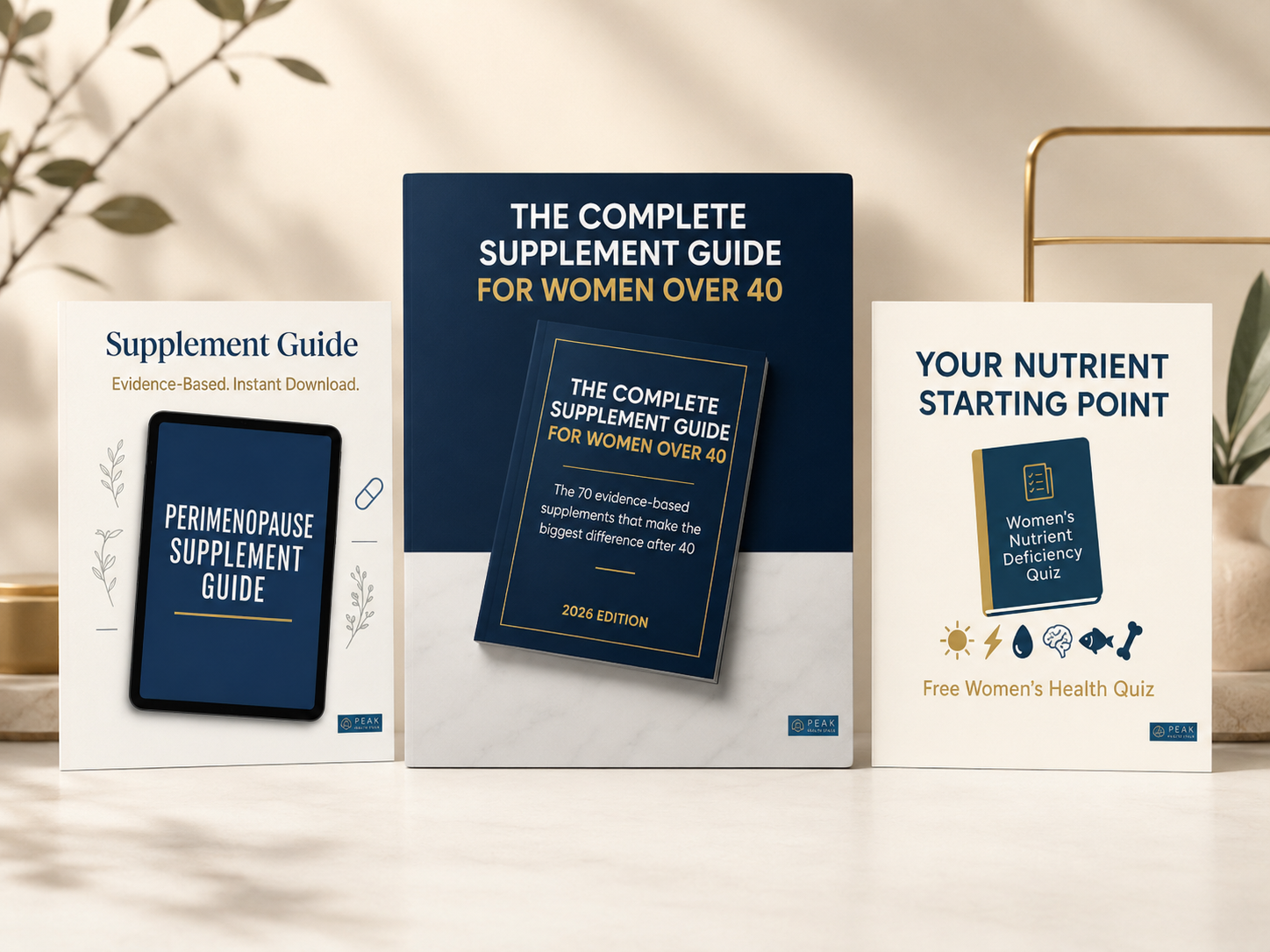
Related Guides on Peak Health Stack
- Best Magnesium Supplement — Which Type?
- Best Supplements for Anxiety and Stress
- How to Improve Sleep Quality Naturally
- Best Supplements for Stress and Cortisol

Stop Guessing Which Supplements Are Actually Working.
Your Peak Stack helps you log your supplements, track how you feel, and get AI-powered guidance on what is helping, what may be clashing, and what to adjust next.