Best Supplements for GLP-1 Weight Loss — Ozempic, Wegovy and Mounjaro Support
Searches for supplements to take on Ozempic, Wegovy, and Mounjaro are exploding because GLP-1 and GIP/GLP-1 medicines change appetite dramatically. When you eat less, weight can fall, but so can protein intake, fibre intake, micronutrient intake, training fuel, and sometimes muscle mass. The goal is not to build a giant supplement stack on top of a medication. The goal is to protect nutrition while appetite is lower.
This guide is for educational support only. If you are using semaglutide, tirzepatide, liraglutide, or any prescription weight-loss or diabetes medication, your prescriber and pharmacist should guide medication questions, side effects, and contraindications.
The GLP-1 Nutrition Problem
GLP-1 and GIP/GLP-1 medicines can help people feel fuller for longer and reduce appetite. That is the point. But the appetite reduction creates a practical problem: if meals shrink, nutrient density has to rise. Otherwise you can lose weight while quietly losing protein, fibre, iron, B12, calcium, vitamin D, magnesium, and enough total energy to train.
The Priority Stack: Food First, Supplements Second
| Priority | Why it matters | Useful options |
|---|---|---|
| Protein | Supports muscle retention during weight loss. | High-protein meals, whey or plant protein powder if needed. |
| Fibre | Supports fullness, bowel regularity, and gut health. | Beans, lentils, oats, berries, vegetables, psyllium if tolerated. |
| Electrolytes and hydration | Lower food intake can reduce fluid and electrolyte intake. | Water, salted meals, electrolyte tablets if appropriate. |
| Vitamin D | Common deficiency risk independent of GLP-1 use. | Vitamin D3 based on intake, sun, and blood levels. |
| Magnesium | May support muscle function, sleep, and constipation tendency. | Magnesium glycinate or citrate depending on goal. |
| Omega-3 | Helpful if oily fish intake is low. | EPA/DHA from fish oil or algae oil. |
1. Protein Powder: The Most Practical GLP-1 Supplement
If appetite is low, protein becomes the first thing to protect. A protein powder is not magic, but it is convenient. It helps when a full meal feels too large or when breakfast has become coffee and optimism. Whey protein, clear whey, or a quality plant protein can all work. Choose the one you tolerate and will actually use.
A simple target is to include a protein source at each meal. If you are strength training or trying to preserve muscle during weight loss, protein becomes even more important.
2. Fibre: Helpful, But Increase Slowly
Constipation is a common complaint during appetite reduction because food volume, fibre, and fluid often fall together. Fibre can help, but suddenly adding a huge psyllium dose to an already slow digestive system is asking for trouble. Increase gradually, hydrate properly, and stop if symptoms worsen.
3. Electrolytes: Useful When Food Intake Drops
Many electrolytes come from food. If you are eating much less, sweating, training, or feeling light-headed, hydration and sodium intake are worth reviewing. This does not mean everyone needs expensive electrolyte powders. It means water plus sensible salt intake may matter more than it did before.
4. Creatine: Muscle Protection Support
Creatine does not cause fat loss. It supports strength, power, and training performance. That makes it relevant during weight loss because preserving muscle is one of the main goals. If you lift weights or plan to start, creatine monohydrate at 3 to 5g daily is one of the simplest evidence-backed options.
5. Vitamin D, Magnesium and Omega-3: The Foundation Gaps
These are not GLP-1-specific supplements, but they are common gaps. If smaller meals mean less oily fish, fewer magnesium-rich foods, and less overall dietary variety, the basics become more important. Vitamin D is especially worth checking if you live in Ireland, the UK, northern Europe, or spend limited time outdoors.
What to Avoid on GLP-1 Medicines
- Fat burners. You are already using an appetite and weight-management medicine. Adding stimulants usually increases side effects without solving the real problem.
- Detox teas and laxative products. Weight loss is not improved by irritating your gut.
- High-dose single nutrients without blood tests.
- Massive fibre doses started suddenly.
- Any supplement that claims to replace medical monitoring.
Track what changes while appetite changes
Your Peak Stack can help you log supplements, appetite, digestion, sleep, energy, mood, and training so you can see what is helping while your routine changes.

Stop Guessing. Start Tracking What Works.
Your Peak Stack helps you log your supplements, track how you actually feel, and get AI-powered guidance on what’s helping, what may be clashing, and what to adjust next.
GLP-1 Supplement FAQ
Do I need a multivitamin on Ozempic, Wegovy or Mounjaro?
Not automatically. A multivitamin may be useful if your diet has become very restricted, but food quality, protein, fibre, and targeted blood tests are better starting points.
Can I take protein powder on GLP-1 medication?
For most people, yes. Protein powder is food-like nutrition support, not a drug. Choose a type you tolerate and discuss it with your clinician if you have kidney disease or specific medical restrictions.
What supplements help with constipation on GLP-1s?
Fibre, fluids, magnesium citrate, and food volume can help some people, but constipation can have several causes. If it is severe, persistent, painful, or accompanied by vomiting, seek medical advice.
Should I take creatine while losing weight?
Creatine can be useful if you are resistance training and want to support performance and muscle retention. It does not replace protein or training.
Evidence-Based Health Guides
Practical Health Guides for Smarter Supplement Choices
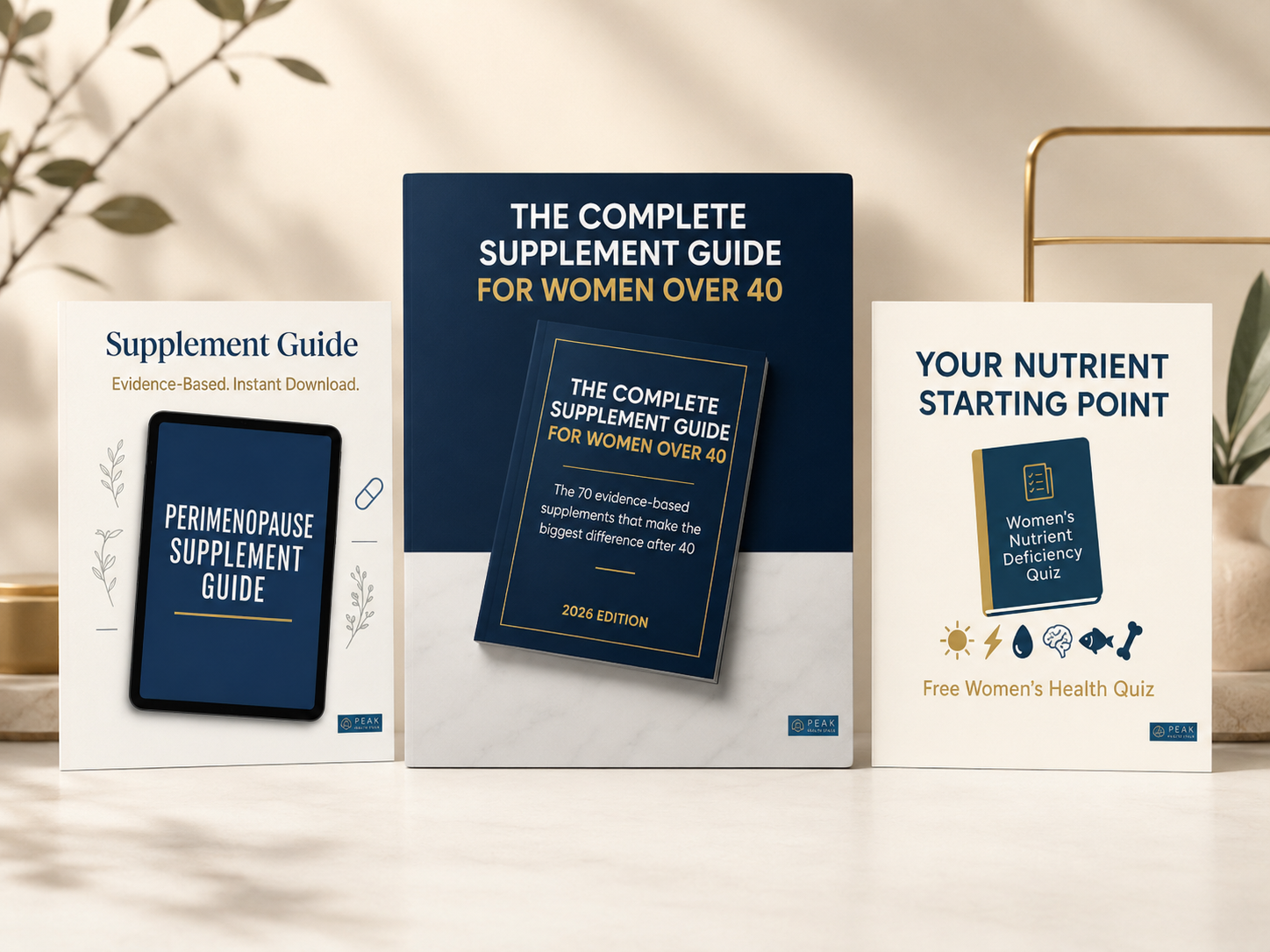
Browse evidence-based guides, workbooks and free resources for supplement timing, forms, nutrient gaps, women’s health, energy and everyday performance.
Related Guides on Peak Health Stack
- Best Protein Powder for Weight Loss — High Protein, Lower Calories
- How Much Protein Do You Actually Need? The Evidence-Based Answer
- Hydration and Electrolytes — Why Water Alone Is Not Enough
- Does Creatine Actually Work? The Honest, Evidence-Based Answer
Medical note: this article does not advise starting, stopping, or changing GLP-1 medication. Speak with your prescriber about side effects, dosing, interactions, pregnancy, contraception, diabetes medication, and monitoring.
Sources and Further Reading
- NHS: Semaglutide medicine information
- NHS England: Weight management injections
- Guy’s and St Thomas’ NHS: Dietary advice for people taking weight loss medicines
Stop Guessing Which Supplements Are Actually Working.
Your Peak Stack helps you log your supplements, track how you feel, and get AI-powered guidance on what is helping, what may be clashing, and what to adjust next.