Ferritin Levels in Women: What Is a Healthy Level for Energy?
If you have been tired, foggy or shedding more hair than usual, someone may have suggested checking your ferritin. It is a sensible test, but the numbers are often misread. A result can sit inside the lab’s "normal" range and still be low enough to be worth discussing, or look reassuring while inflammation is hiding the true picture.
This guide explains what ferritin levels in women actually tell you, what the research says about low ferritin and fatigue, and what to ask before you buy an iron supplement. It is aimed at women in their 30s, 40s and beyond, when heavier perimenopausal periods can change iron status.
What ferritin actually tells you
Ferritin is a protein that stores iron inside your cells. A small amount leaks into the blood, and a blood test measures it. In general, it is the best single marker of your iron stores, whereas haemoglobin tells you whether iron shortage has already progressed to anaemia.
That distinction matters. Iron stores can run low for months or years before haemoglobin drops, which is why a normal full blood count does not always settle the question.
Ferritin has one big limitation: it is also an acute-phase protein. Infection, inflammation, liver problems and some other conditions push it up, which can mask a genuine shortage. That is why clinicians usually read it alongside other tests rather than in isolation.
What counts as a low ferritin level?
There is no single universal cut-off, and you will see different numbers depending on the source. Results are usually reported in µg/L, which is the same as ng/mL.
| Source or context | Typical threshold | What it means |
|---|---|---|
| WHO 2020 guideline (healthy adults) | Below 15 µg/L | Indicates depleted iron stores |
| WHO 2020 guideline (with infection or inflammation) | Below 70 µg/L | Higher cut-off because inflammation raises ferritin |
| Some clinicians and newer proposals | Around 30 µg/L | A more sensitive cut-off to catch earlier deficiency |
| Online "optimal" targets | 40–70+ µg/L | Not validated by trials as universal targets |
The WHO threshold comes from its guideline on using ferritin concentrations to assess iron status. Reference ranges printed on lab reports are far wider, which is one reason a result flagged "normal" can still be on the low side for you.
Can low ferritin cause tiredness if your haemoglobin is normal?
It may, in some women. A randomised controlled trial in the Canadian Medical Association Journal (Vaucher et al., 2012) studied menstruating women with unexplained fatigue, low ferritin (50 µg/L or below) and normal haemoglobin. After 12 weeks, fatigue improved more in the iron group than in the placebo group.
Two cautions are worth keeping in mind:
- The trial was relatively small and short, and fatigue is subjective.
- Many things cause tiredness, including poor sleep, thyroid problems, low mood, low vitamin B12 or vitamin D, and simply a busy life. Our guide to low energy in women walks through the wider checklist.
So low ferritin can be one piece of the puzzle, not a guaranteed explanation.
Why ferritin can fall in your 40s
Iron needs stay relatively high through the menstruating years, and several things can drain stores:
- Heavier or more frequent periods, which are common in perimenopause.
- A low-iron diet, including some vegetarian and vegan diets.
- Endurance training, which can increase iron losses.
- Absorption problems, such as coeliac disease or some gut conditions.
- Blood loss elsewhere, which always deserves a medical look.
After menopause, periods stop and ferritin tends to drift upwards, so the "right" action in your late 40s can be very different from your early 50s. Our perimenopause supplement guide covers how iron fits into that transition.
Ferritin and hair shedding: what is known
Low ferritin is frequently linked online to hair thinning, and you will see targets of 40, 70 or even higher quoted as "required" for hair regrowth. The honest position is that the evidence is mixed. Studies of women with certain types of hair shedding often find lower ferritin on average, but no trial has established a universal ferritin number that guarantees regrowth. If hair loss is your main concern, it is worth seeing your GP, because thyroid function, hormones and other causes need checking too.
Test first, then decide
Iron is one of the few supplements where guessing is a poor strategy. Too little can leave you flat; too much is not harmless, and some people carry genetic conditions that cause iron to build up. Before supplementing, it is reasonable to ask your GP about:
- Ferritin, plus a full blood count.
- Transferrin saturation, which helps show how much iron is available to your body.
- CRP or another inflammation marker, if there is any reason ferritin might be falsely high.
- The cause, particularly if you have heavy periods, bleeding between periods, black stools or unexplained weight loss.
The NHS guidance on iron deficiency anaemia lists symptoms and when to seek medical advice.
If your ferritin is low
Your clinician will advise on the right dose and duration. Practical points that often come up:
- Food first where possible. Red meat, poultry, fish, lentils, beans and fortified cereals all contribute. Pairing plant sources with vitamin C-rich foods can improve absorption.
- Mind the timing. Tea and coffee can reduce absorption of non-haem iron, and calcium can compete with it. We explain this in can you take supplements with coffee and supplements you should not take together.
- Choose a gentler form if tablets upset your stomach. Our best iron supplement guide compares forms such as bisglycinate and ferrous sulfate.
- Be patient and recheck. Rebuilding stores usually takes months rather than weeks, so ask when to repeat the test. Our timeline for how long supplements take to work sets realistic expectations.
PHS VERIFIED PICK
Thorne Iron Bisglycinate
WHY WE PICKED THIS:
Evidence Score: 4.1/5 | 19 RCTs
Typically £12–18 · 60 capsules · 2-month supply
We earn a small commission on this link. It never affects which products we recommend.
Affiliate disclosure: some links on Peak Health Stack are affiliate links, which means we may earn a commission at no extra cost to you. Read how we choose and fund our content on our How We Make Money page.
A sensible next step
If tiredness has dragged on for weeks, the most useful move is a conversation and a blood test, not a bigger supplement stack. While you wait, track your sleep, cycle, energy and diet so you and your clinician have something concrete to work with. The Energy Diagnosis Workbook is built for exactly that, and the free Women’s Nutrient Deficiency Quiz can help you decide what to raise at your appointment.
Women’s Health Guides
Not Sure Which Supplements Actually Matter?
Start with our evidence-based women’s guides and free nutrient quiz. Built for energy, hormones, sleep, bones and everyday health after 40.
Explore Women’s Guides →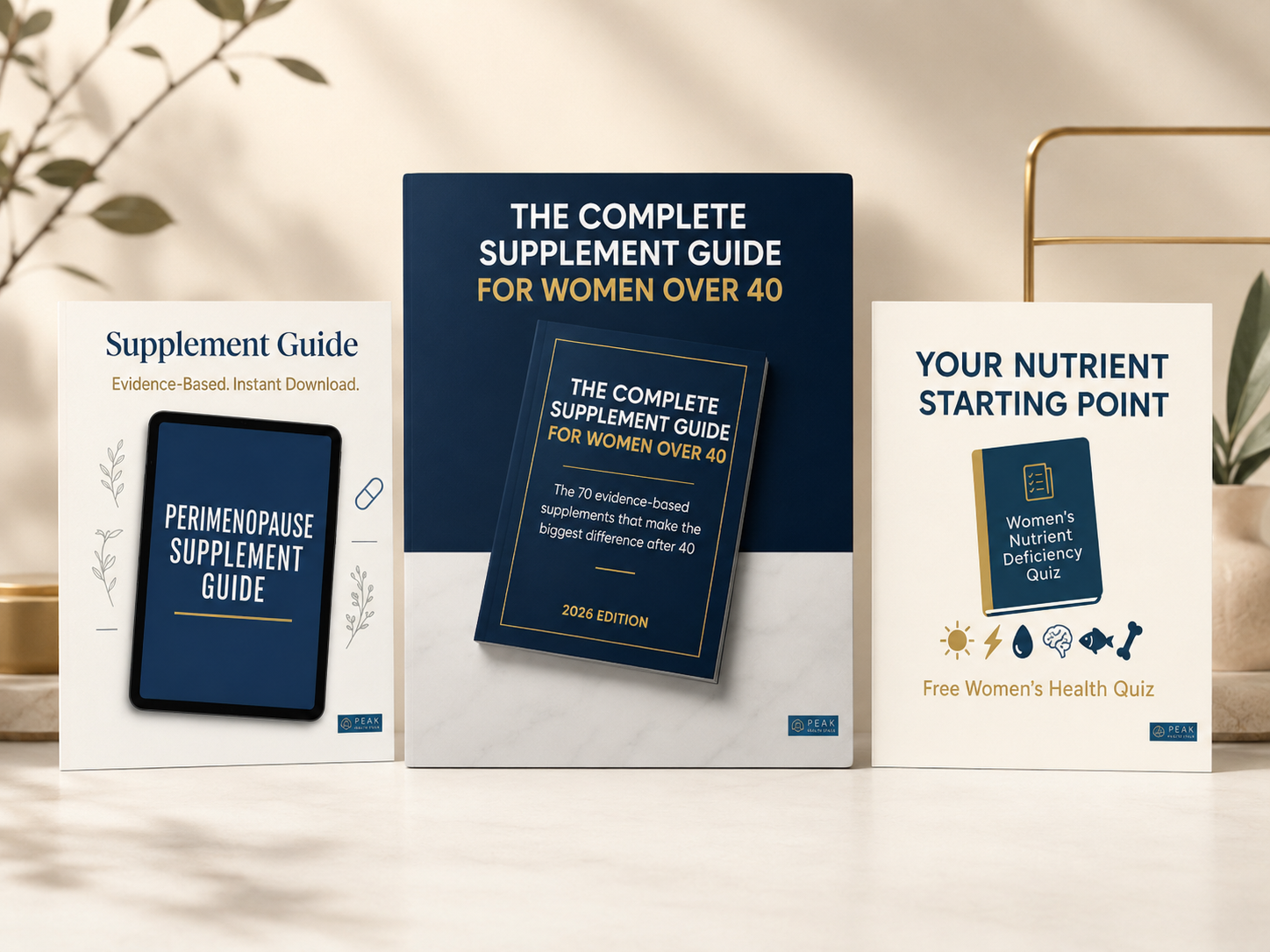
Frequently Asked Questions
What is a good ferritin level for a woman over 40?
There is no single agreed "ideal". Below about 15 µg/L is clearly low by WHO criteria, and some clinicians treat results under 30 µg/L as worth acting on, particularly when symptoms fit. Higher "optimal" numbers quoted online are not backed by trials as universal targets, so interpret your result with your GP.
Can ferritin be normal and I still feel tired?
Yes. Tiredness has many causes, and a mid-range ferritin does not rule iron out as a contributor in every case. Equally, a normal ferritin makes it more important to look at sleep, thyroid function, mood, vitamin B12 and other factors.
Should I take iron if my haemoglobin is normal?
Only after checking your ferritin and discussing it with a clinician. Iron is not risk-free, and the dose and duration should match your results.
How long does it take to raise ferritin?
Typically months, not weeks, and it depends on the starting level, dose, cause of the deficiency and how well you absorb iron. Ask your GP when to repeat the test.
Related Peak Health Stack guides
- Low Energy in Women: Iron, B12, Vitamin D or Thyroid?
- Best Iron Supplement: How to Supplement Without the Side Effects
- Best Supplements for Perimenopause
- Best Supplements for Women Over 40
Health note: this article is educational and is not personal medical advice. Speak with your GP, pharmacist, dietitian or other qualified clinician before starting supplements if you are pregnant or breastfeeding, take medication, have a medical condition, have abnormal blood tests, or are considering iron or multiple supplements.

Stop Guessing Which Supplements Are Actually Working.
Your Peak Stack helps you log your supplements, track how you feel, and get AI-powered guidance on what is helping, what may be clashing, and what to adjust next.