Are Your Supplements Working? How to Tell What Helps and What to Stop
are my supplements working is one of the most useful searches someone can make before buying another supplement, because it usually means they are ready to act but unsure what is safe, worthwhile, or right for them. This guide gives you the practical, evidence-aware version: what matters, what to check first, what to avoid, and when a paid guide or tracker can save you from expensive guesswork.
Most people judge supplements by vibes: a good week means the new capsule is magic, a bad week means it is useless. The body is noisier than that. Sleep, stress, food, menstrual cycle, illness, training and caffeine can all blur the signal. You need a cleaner way to judge.
Track what is actually working.
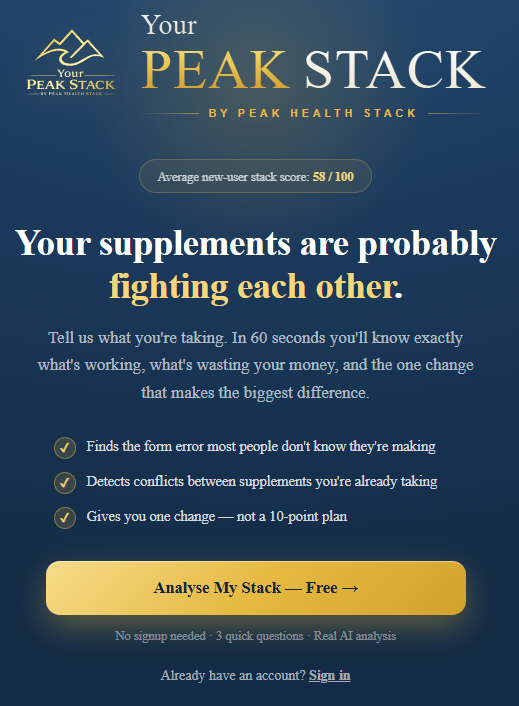
Your Peak Stack helps you log your supplements, timing, dose and daily symptoms so you can spot what helps, what clashes, and what may be wasted spend.

Stop Guessing. Start Tracking What Works.
Your Peak Stack helps you log your supplements, track how you actually feel, and get AI-powered guidance on what’s helping, what may be clashing, and what to adjust next.
The Big Rule: Track the Outcome the Supplement Claims to Improve
If you take magnesium for sleep, track sleep onset, night waking and morning grogginess. If you take creatine for training, track reps, strength, body weight and recovery. If you take iron for fatigue, track energy but also confirm with blood work under professional guidance.
Signs a Supplement Might Be Helping
The most trustworthy improvement is boring and repeatable. You do not need to feel transformed by Tuesday. You want the same pattern showing up across ordinary days.
For example, magnesium might help you fall back asleep faster after waking. Creatine may show up as an extra rep or two before you notice a mirror change. Protein may reduce evening snacking because your meals finally have enough structure.
- The benefit matches the reason you started.
- The improvement appears on multiple days, not just once.
- You notice less need for a workaround, such as caffeine, painkillers or snacks.
- The result remains when life is normal, not only during an unusually calm week.
- There are no meaningful side effects.
Signs a Supplement Is Probably Not Worth Keeping
A supplement does not need to be dangerous to deserve removal. Some products simply fail the value test. If you cannot identify a clear benefit after a fair trial, and there is no deficiency or clinician-directed reason to continue, it may be shelf clutter with a label.
This is especially true for blends. If a product contains 18 ingredients and you feel slightly better, you still do not know why. That makes it hard to repeat the benefit or avoid the cost.
- No clear change after a realistic test window.
- Side effects appear, especially digestive issues, headaches, palpitations or sleep disruption.
- The dose is hidden inside a proprietary blend.
- It overlaps heavily with other supplements you take.
- You only keep taking it because you already bought it.
Use a Stop, Keep, Change Review Every Month
Once a month, review your stack like a tiny board meeting. No drama, no shame, just decisions. Keep what has a purpose. Change what causes issues. Stop what does nothing.
This is also where a tracker helps. Memory is a terrible spreadsheet. It edits itself while you sleep and adds confetti to whatever you bought most recently.
The Paid Product Conversion Angle: Why Tracking Builds Trust
People buy health guides when they trust the method. A guide should not promise miracle outcomes; it should give a clearer system. That is the conversion bridge for Peak Health Stack: help readers realise they do not need more hype, they need a decision framework.
A visitor who learns how to judge supplements is more likely to buy a checklist, workbook or tracker because they understand the value of structure. That is the quiet trust engine.
The goal is not to take supplements forever. The goal is to know what earns its place.
Build your health stack with less guesswork.
Visit the Peak Health Stack store for guides, workbooks and free resources built to help you choose better, track better and avoid wasting money.
Frequently Asked Questions
How long before I know if a supplement works?
It depends on the supplement and the goal. Sleep or digestion changes may appear within days to weeks. Training and deficiency-related changes usually need weeks. Blood-level changes should be monitored with appropriate testing.
Can supplements make you feel worse at first?
Some can cause side effects immediately, especially digestive symptoms, nausea, sleep disruption or jitteriness. Do not assume feeling worse means it is “detox”. Stop and seek advice if symptoms are significant.
What is the best way to track supplements?
Track dose, timing, consistency, symptoms, sleep, energy, mood, digestion and any side effects. A simple notes app works, but a dedicated tracker is easier to review.
Final Thought
Supplements earn trust through patterns, not promises. Define the job, track the result, give it a fair window, and remove anything that cannot justify its place.
Need the full step-by-step version?
Browse all Peak Health Stack guides for practical checklists, supplement timing plans, women’s health resources and evidence-based workbooks.
Evidence-Based Health Guides
Practical Health Guides for Smarter Supplement Choices
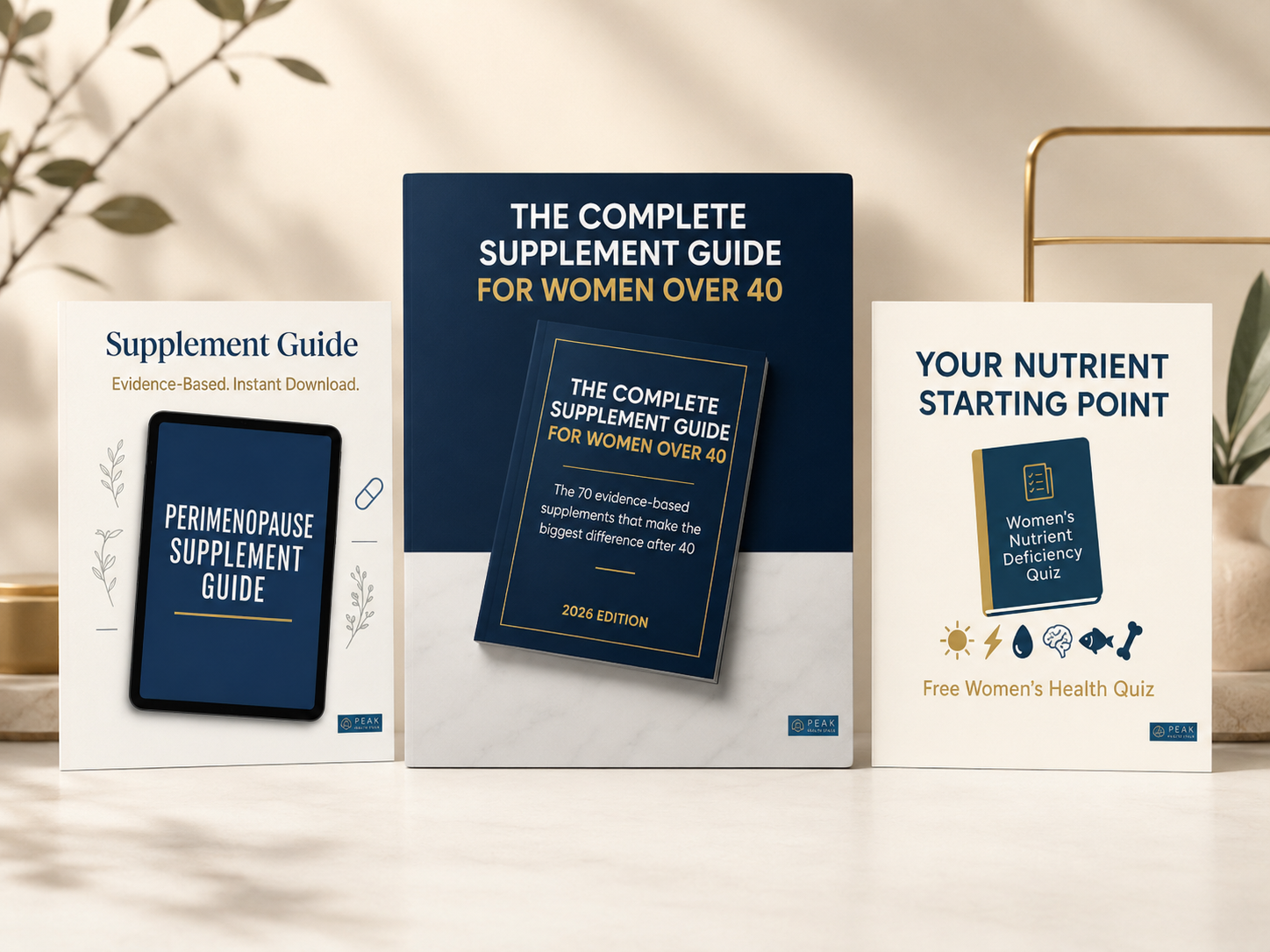
Browse evidence-based guides, workbooks and free resources for supplement timing, forms, nutrient gaps, women’s health, energy and everyday performance.
Health note: this article is educational and is not medical advice. Speak with your GP, pharmacist, dietitian, or relevant clinician before starting supplements if you are pregnant, breastfeeding, taking medication, managing a condition, or considering iron, high-dose vitamin D, hormonal support, or multiple supplements at once.
Stop Guessing Which Supplements Are Actually Working.
Your Peak Stack helps you log your supplements, track how you feel, and get AI-powered guidance on what is helping, what may be clashing, and what to adjust next.