Supplement Tracker — How to Track Your Stack, Symptoms and Results Properly
A supplement tracker is the simplest way to find out whether your routine is working. This guide shows what to log, how long to track and how to read the pattern, so you can avoid buying products by guesswork.
A supplement tracker is not just a list of pills. The useful version connects what you take with how you feel. That is where the money-saving magic lives: not in the label, but in the pattern between dose, timing, consistency and results.
Track what is actually working.
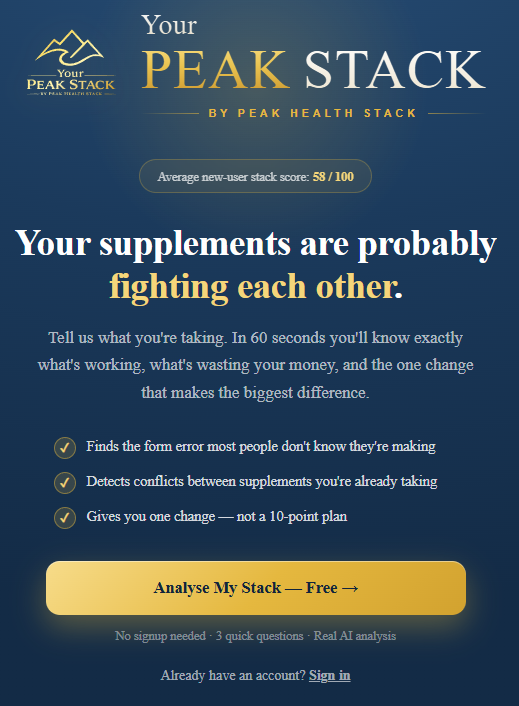
Your Peak Stack helps you log your supplements, timing, dose and daily symptoms so you can spot what helps, what clashes, and what may be wasted spend.

Stop Guessing. Start Tracking What Works.
Your Peak Stack helps you log your supplements, track how you actually feel, and get AI-powered guidance on what’s helping, what may be clashing, and what to adjust next.
Why Most Supplement Logs Fail
Most logs only record the product name. That is not enough. If you write “magnesium” but not the form, dose, time, food context or symptoms, you have a receipt, not a tracker.
A good supplement tracker answers three questions: what did I take, when did I take it, and what happened after? The fourth question is the expensive one: is this worth continuing?
What to Track Every Day
You do not need a laboratory notebook. You need a consistent five-minute routine. The goal is to capture enough information to spot patterns without making the habit so annoying that you abandon it by Thursday.
- Supplement name, form and dose.
- Time taken and whether it was with food.
- Sleep quality, energy, focus and mood.
- Digestion, bloating, nausea or stool changes.
- Training performance or recovery if relevant.
- Menstrual cycle day if relevant for women.
- Any medication changes, illness, alcohol or unusual stress.
How Long to Track Before Deciding
Different supplements need different windows (our guide on how long supplements take to work gives realistic ranges). Do not quit creatine after three gym sessions because your biceps did not file a planning application. Do not take a sleep supplement for six months if it clearly makes you groggy every morning.
Use the shortest fair test window. If it causes obvious side effects, stop sooner. If it is correcting a deficiency, testing and professional guidance matter more than guesswork.
Why Tracking Beats Guessing
People who track properly often find two things quickly: their routine is messier than they thought, and structure saves money. If you want to judge results more carefully, our guide to telling whether your supplements are working pairs well with a log.
Supplement information is useful, but feedback from your own routine is what shows what to keep. Your Peak Stack is built for that job, though a notes app or spreadsheet also works.
The supplement that works on paper still has to work in your actual life.
Track what is actually working.
Your Peak Stack helps you log your supplements, timing, dose and daily symptoms so you can spot what helps, what clashes, and what may be wasted spend.
Stop Guessing Which Supplements Are Actually Working.
Your Peak Stack helps you log your supplements, track how you feel, and get AI-powered insights on what’s helping, what may be wasting money, and what to adjust next.
Frequently Asked Questions
Can I track supplements in a spreadsheet?
Yes. A spreadsheet works if you use it consistently. The downside is that it can become clunky on mobile and harder to review for patterns.
Should I track symptoms every day?
Daily tracking is best for the first few weeks because it reduces memory bias. After that, you can review weekly if the habit is stable.
What is the most important thing to track?
The target outcome. If you take something for sleep, track sleep. If you take it for energy, track energy. Product names alone do not tell you whether it worked.
Final Thought
A supplement tracker turns your routine from a guessing game into a feedback loop. The better your data, the fewer random products you need to buy.
Build your health stack with less guesswork.
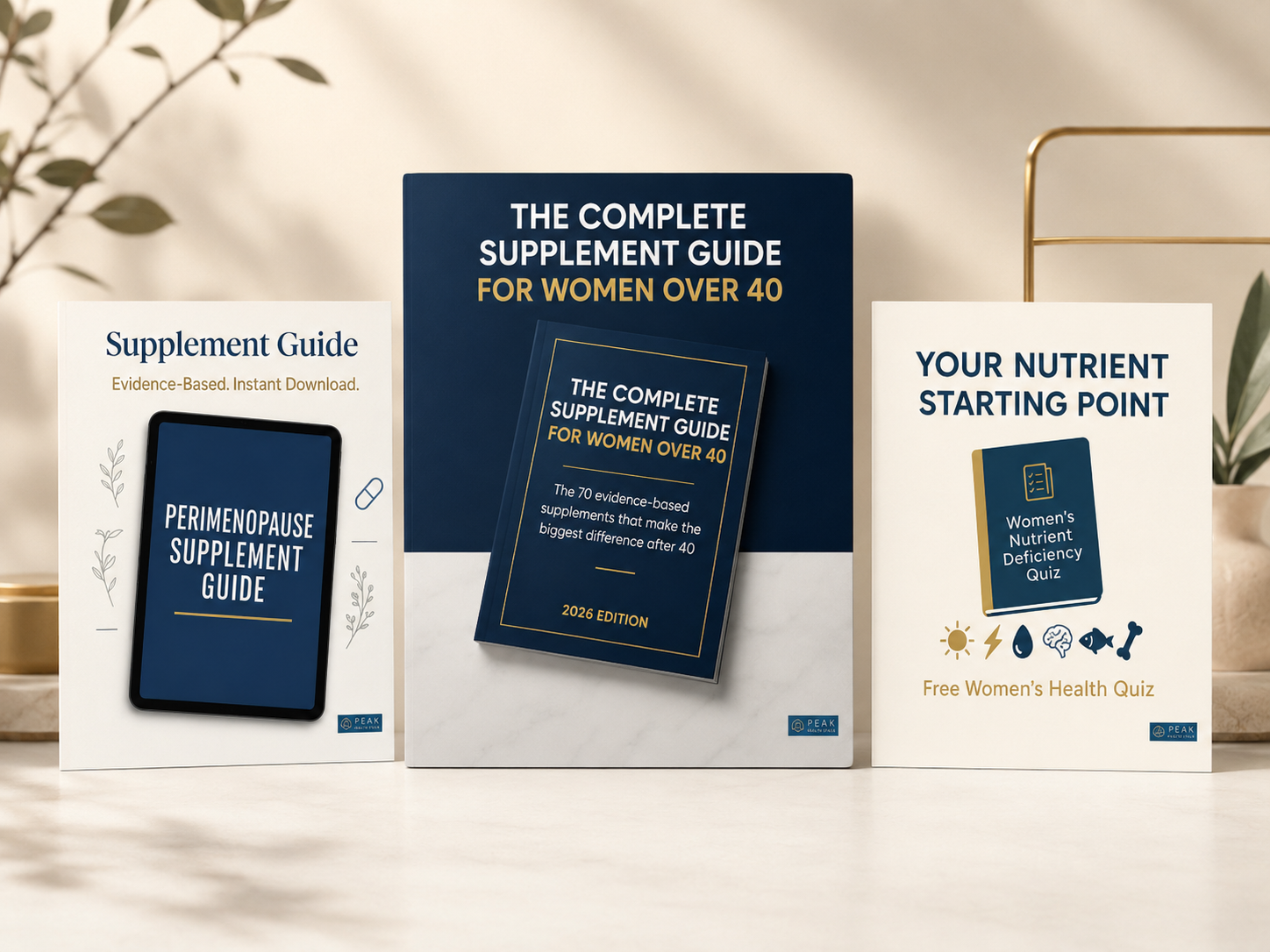
Visit the Peak Health Stack store for guides, workbooks and free resources built to help you choose better, track better and avoid wasting money.
Evidence-Based Health Guides
Practical Health Guides for Smarter Supplement Choices
Browse evidence-based guides, workbooks and free resources for supplement timing, forms, nutrient gaps, women’s health, energy and everyday performance.
Health note: this article is educational and is not medical advice. Speak with your GP, pharmacist, dietitian, or relevant clinician before starting supplements if you are pregnant, breastfeeding, taking medication, managing a condition, or considering iron, high-dose vitamin D, hormonal support, or multiple supplements at once.
Stop Guessing Which Supplements Are Actually Working.
Your Peak Stack helps you log your supplements, track how you feel, and get AI-powered guidance on what is helping, what may be clashing, and what to adjust next.