What Supplements Should I Take? A Simple Decision Tree for Real-Life Health Goals
“What supplements should I take?” is the right question, but most answers start in the wrong place. They begin with a product list. The better starting point is your diet, symptoms, life stage, blood tests, medication, and goals. Otherwise you end up with a supplement shelf that looks productive but behaves like a tiny expensive museum.
The Decision Tree: Start Here
| Your situation | First checks | Likely supplement shortlist |
|---|---|---|
| Low sunlight, winter, indoors a lot | 25(OH)D blood test if possible | Vitamin D3, possibly with K2 if appropriate |
| Heavy periods, fatigue, breathlessness | Ferritin, full blood count, GP review | Iron only if low or advised |
| Plant-based diet | B12, ferritin, vitamin D, omega-3 intake | B12, vitamin D, algae omega-3, iron only if low |
| Poor sleep, stress, muscle tension | Caffeine timing, sleep routine, magnesium intake | Magnesium glycinate |
| Strength training or ageing muscle concern | Protein intake, training consistency | Creatine monohydrate, protein powder if needed |
| Low oily fish intake | Diet review | Omega-3 EPA/DHA |
| Perimenopause or menopause symptoms | GP review, symptom tracking | Vitamin D, magnesium, omega-3, targeted options by symptom |
Step 1: Fix the Most Common Gaps Before Buying Fancy Supplements
The boring gaps are usually the valuable ones: vitamin D, magnesium intake, omega-3 intake, protein, fibre, B12 for plant-based diets, and iron for people with proven low stores. These do not look glamorous on Instagram, which is precisely why they are useful. They solve common, measurable problems rather than selling a fog machine with a capsule inside.
Step 2: Use Blood Tests for the Nutrients That Can Backfire
Some supplements are sensible to test before taking, especially iron. Low ferritin can make you feel flattened, but unnecessary iron is not harmless. Vitamin D is also worth testing if you have symptoms, risk factors, or plan to take higher doses long term. B12 testing is useful for vegans, vegetarians, older adults, people taking metformin or acid-suppressing medication, and anyone with unexplained fatigue or neurological symptoms.
Step 3: Match Supplements to a Specific Job
A supplement should have a job description. “Energy” is too vague. “Correct low ferritin confirmed by blood test” is clear. “Improve omega-3 intake because I eat oily fish once per month” is clear. “Support strength training with creatine 5g daily” is clear. If you cannot explain why a supplement is in your stack, it is probably there because marketing quietly moved in and unpacked a suitcase.
The Core Stack for Most Adults
| Supplement | Who it suits | Typical use |
|---|---|---|
| Vitamin D3 | People with low sunlight exposure or low levels | Daily with food, dose based on need |
| Magnesium glycinate | Poor sleep, stress, low dietary magnesium | Evening, usually 200 to 400mg elemental magnesium |
| Omega-3 EPA/DHA | People who rarely eat oily fish | With meals |
| Creatine monohydrate | Strength training, performance, muscle preservation | 3 to 5g daily |
| Protein powder | People who struggle to hit protein targets from food | As food support, not a magic supplement |
What Not to Start With
- Fat burners, because the effect is usually small and the marketing is usually enormous.
- Testosterone boosters, unless you enjoy paying for wishful thinking in capsule form.
- Proprietary pre-workout blends with under-dosed ingredients.
- Greens powders as a replacement for vegetables.
- Ten single-nutrient supplements before checking whether your diet and blood tests justify them.
How to Build Your Stack Without Creating Chaos
Add one supplement at a time, then track the result. Give most supplements two to six weeks unless the effect should be immediate, such as caffeine. If you start vitamin D, magnesium, omega-3, ashwagandha, a greens powder, and a sleep blend on the same Monday, you will have no idea what helped, what did nothing, or what upset your stomach.
A clean experiment looks like this: choose one goal, choose one supplement, record baseline symptoms, take a sensible dose consistently, then review. Your own data is the antidote to supplement confusion.
Turn your supplement stack into a personal experiment
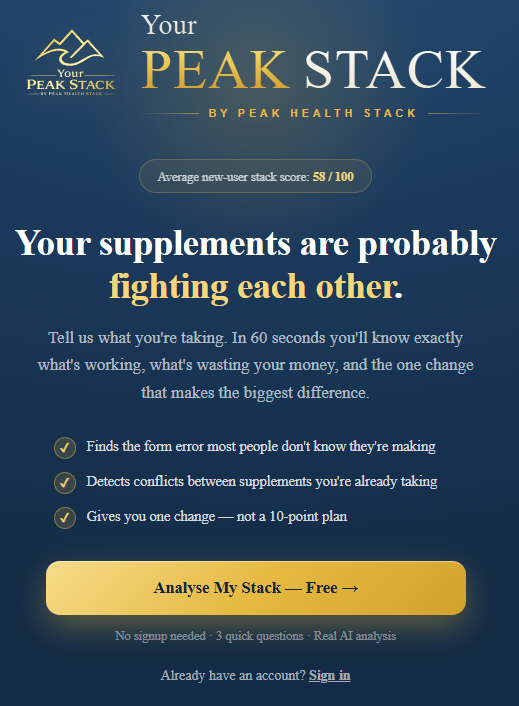
Your Peak Stack tracks what you take and how you feel, then helps you see patterns across sleep, energy, focus, mood, digestion, hormones, and recovery.

Stop Guessing. Start Tracking What Works.
Your Peak Stack helps you log your supplements, track how you actually feel, and get AI-powered guidance on what’s helping, what may be clashing, and what to adjust next.
What Supplements Should I Take? FAQ
What is the best first supplement to take?
For many adults in northern climates, vitamin D is the highest-priority first check. Magnesium and omega-3 are also common starting points depending on diet, sleep, stress, and fish intake.
Should I take a multivitamin?
A multivitamin can be useful as a safety net, but it is rarely the best solution for a specific deficiency. Targeted supplementation based on diet and tests is usually more effective.
How many supplements is too many?
If you cannot explain the reason, dose, timing, and expected benefit of each one, the stack is probably too complicated. More bottles do not automatically mean more health.
Do I need supplements if I eat well?
Maybe not many. Vitamin D, omega-3, B12 for plant-based diets, and creatine for training goals are common exceptions because they are hard to fully cover through diet or lifestyle for many people.
Evidence-Based Health Guides
Practical Health Guides for Smarter Supplement Choices
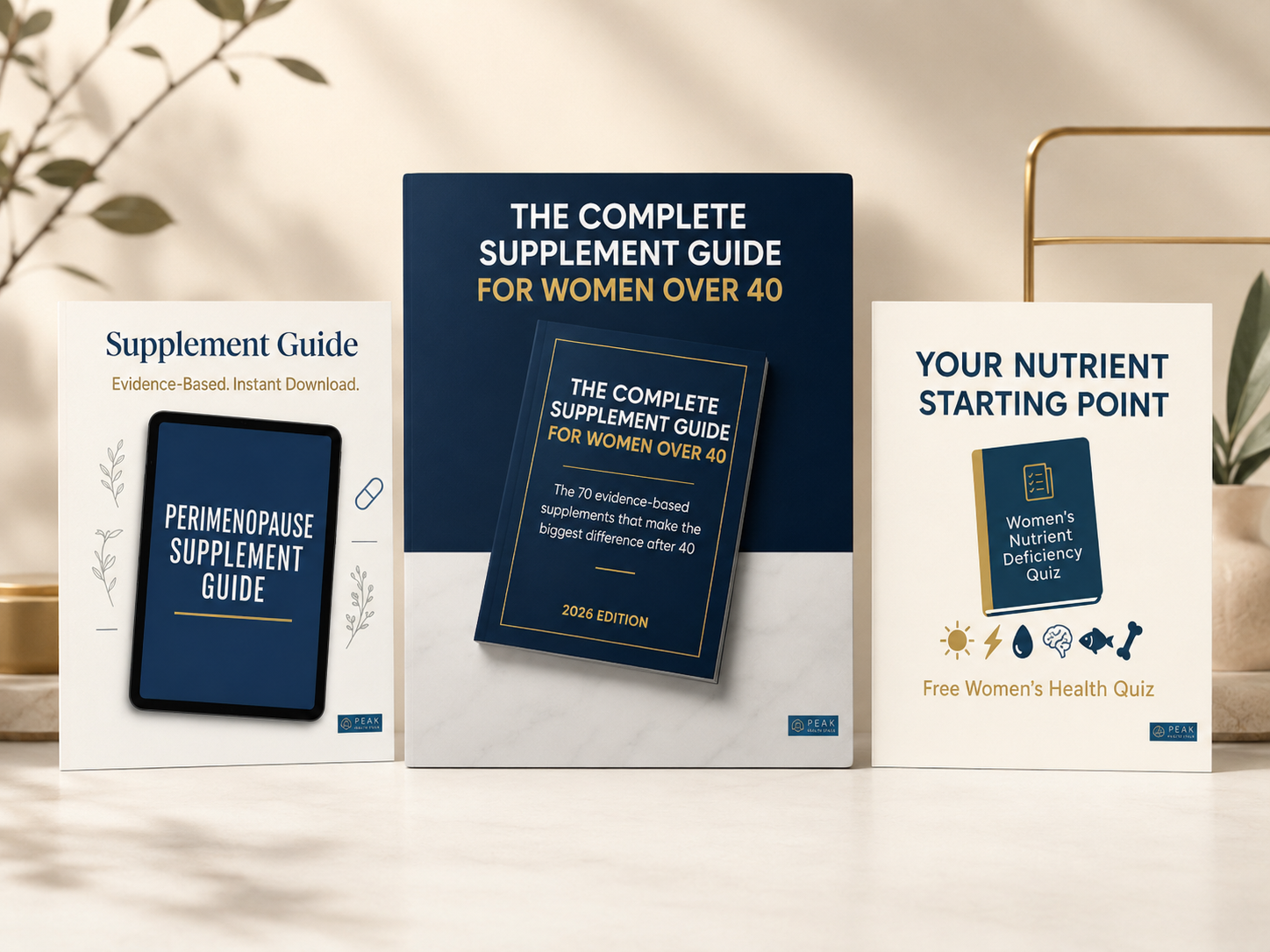
Browse evidence-based guides, workbooks and free resources for supplement timing, forms, nutrient gaps, women’s health, energy and everyday performance.
Related Guides on Peak Health Stack
- Best Supplements for Beginners — A Complete Starter Guide
- Vitamin D Deficiency — Signs, Symptoms and How to Fix It
- Best Supplements for Energy — Natural Options That Actually Work
- How Much Protein Do You Actually Need? The Evidence-Based Answer
Medical note: symptoms such as persistent fatigue, low mood, breathlessness, hair loss, palpitations, unexplained weight change, or heavy bleeding deserve proper medical assessment, not just a supplement order.
Sources and Further Reading
- NIH Office of Dietary Supplements: Dietary supplement fact sheets
- NIH Office of Dietary Supplements: Vitamin D fact sheet
- NIH Office of Dietary Supplements: Multivitamin/mineral supplements
Stop Guessing Which Supplements Are Actually Working.
Your Peak Stack helps you log your supplements, track how you feel, and get AI-powered guidance on what is helping, what may be clashing, and what to adjust next.