Perimenopause Supplement Checklist — What Women Over 40 Should Check First
perimenopause supplement checklist is one of the most useful searches someone can make before buying another supplement, because it usually means they are ready to act but unsure what is safe, worthwhile, or right for them. This guide gives you the practical, evidence-aware version: what matters, what to check first, what to avoid, and when a paid guide or tracker can save you from expensive guesswork.
Perimenopause is a prime time for supplement confusion because symptoms can overlap: fatigue, poor sleep, low mood, heavier periods, anxiety, weight changes and brain fog can all have multiple causes. The answer is not a giant hormone-balancing stack. It is a careful checklist.
Want the women’s version with less guesswork?
Browse the Peak Health Stack women’s guides for practical, evidence-aware resources on energy, hormones, perimenopause, nutrient gaps and daily routines.
Women’s Health Guides
Not Sure Which Supplements Actually Matter?
Start with our evidence-based women’s guides and free nutrient quiz. Built for energy, hormones, sleep, bones and everyday health after 40.
Explore Women’s Guides →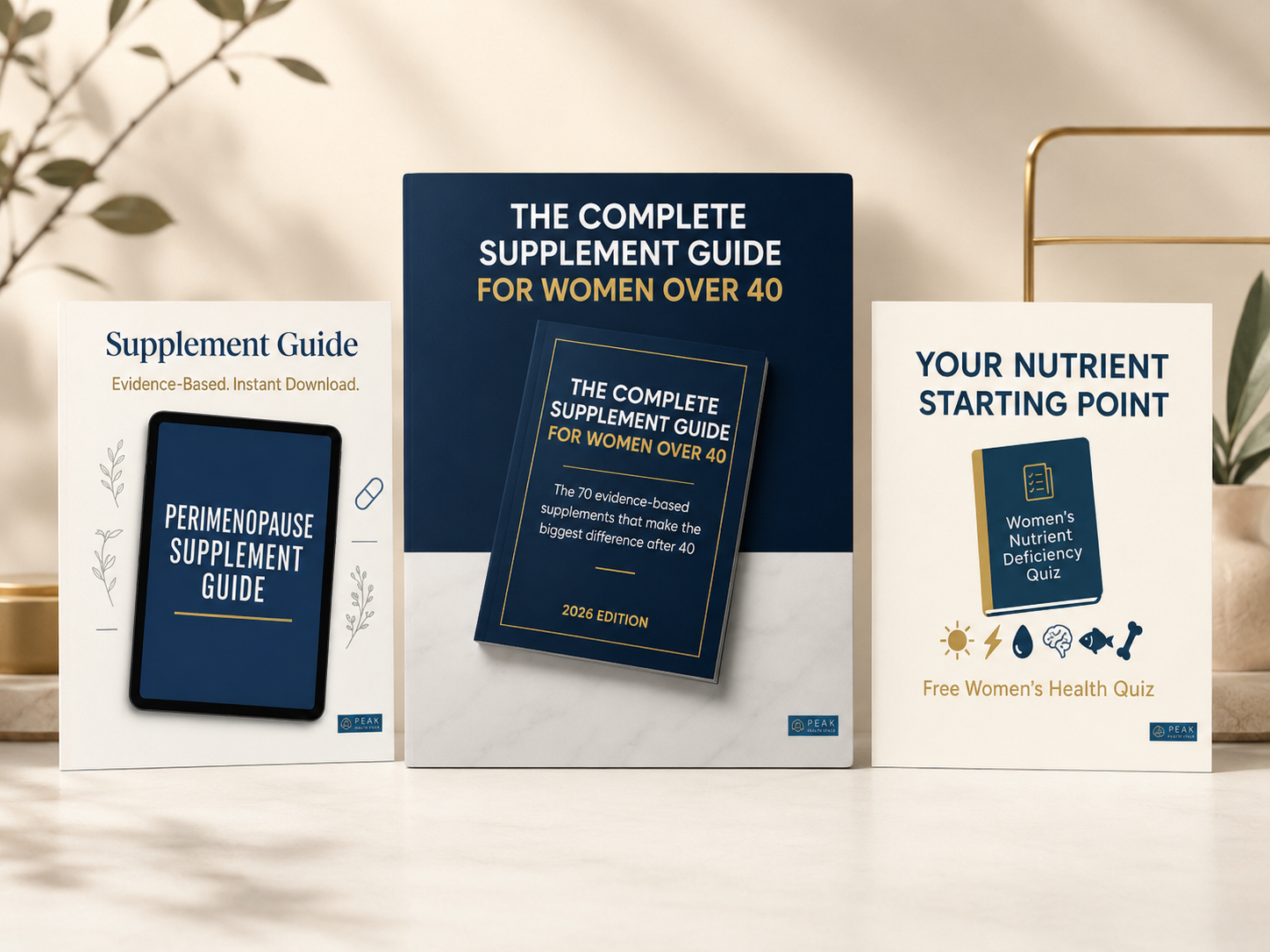
Start With the Basics That Often Get Missed
Women over 40 are often sold exotic hormone blends before anyone has checked the boring basics. Boring can be powerful. Iron status, vitamin D, B12, magnesium, protein intake, alcohol, sleep and resistance training all influence how you feel.
Supplements may help, but they work best when they are attached to the right problem.
- Ferritin and iron status, especially with heavy or changing periods.
- Vitamin D, especially in low-sun climates.
- Vitamin B12, especially with low animal-food intake or gut issues.
- Magnesium intake and tolerance.
- Protein intake and muscle maintenance.
- Calcium intake and bone-health context.
- Medication, thyroid and medical history.
Symptom Clusters and What They May Point Toward
No symptom list can diagnose you, but patterns can show what to investigate. This is where a guide or tracker becomes genuinely useful: it helps you stop treating every symptom as a separate fire.
Supplements Worth Considering in Perimenopause
The strongest starting point is usually not a branded menopause complex. Consider specific nutrients for specific jobs. Magnesium for sleep and tension. Vitamin D for bone, muscle and immune health if intake or status is low. Protein and creatine for muscle support when paired with resistance training. Omega-3 if oily fish intake is low.
Phytoestrogens, black cohosh and herbal blends are more individual. They may be relevant for some women, but they deserve more caution if you take medication, have a hormone-sensitive condition, or are unsure about your risk profile.
- Magnesium glycinate: sleep quality, muscle tension and stress support.
- Vitamin D3: bone and muscle support, especially if low.
- Omega-3 EPA/DHA: useful if oily fish intake is low.
- Protein powder: convenient support for hitting daily protein targets.
- Creatine monohydrate: training, strength and muscle support.
- Iron: only when needed, ideally based on testing and advice.
What to Avoid
Perimenopause is fertile soil for supplement marketing. Be careful with products that promise to reset hormones, melt menopause belly fat, detox oestrogen or fix every symptom in one scoop.
Your hormones are not a kitchen cupboard that can be tidied with a proprietary blend.
- High-dose iron without testing.
- Megadose vitamin D without monitoring.
- Hormone-balancing blends with hidden doses.
- Products claiming rapid belly-fat loss.
- Multiple sleep products layered together without tracking.
- Ignoring symptoms that deserve medical review, such as very heavy bleeding or sudden changes.
Where Peak Health Stack Products Fit
This topic is a natural fit for Women’s Guides and Your Peak Stack. The guide gives the framework; the tracker helps users see what is happening in real life. For conversion, the callout should feel like a next step, not a sales trapdoor.
A good CTA here: “If you want the full women’s version, use the Women’s Guides. If you want to track your own stack, use Your Peak Stack.”
Track what is actually working.
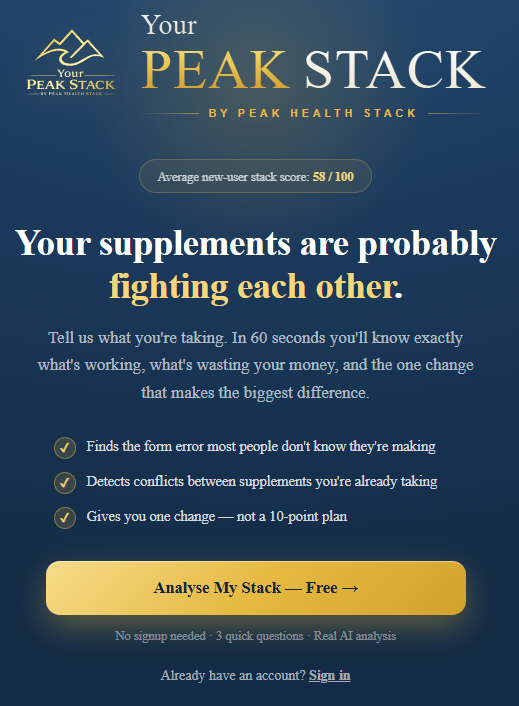
Your Peak Stack helps you log your supplements, timing, dose and daily symptoms so you can spot what helps, what clashes, and what may be wasted spend.

Stop Guessing. Start Tracking What Works.
Your Peak Stack helps you log your supplements, track how you actually feel, and get AI-powered guidance on what’s helping, what may be clashing, and what to adjust next.
Frequently Asked Questions
What supplements are best for perimenopause?
There is no single best stack. Common starting points include vitamin D if low, magnesium for sleep and tension, omega-3 if fish intake is low, protein and creatine for muscle support, and iron only when needed.
Should women over 40 take iron?
Not automatically. Iron can be very helpful if ferritin or iron status is low, especially with heavy periods, but unnecessary iron is not harmless. Testing and professional advice are sensible.
Can supplements fix perimenopause symptoms?
They may support specific gaps, but they do not replace medical care, sleep, training, nutrition or hormone-related treatment where appropriate.
Final Thought
A perimenopause supplement checklist should reduce chaos, not add to it. Check the basics first, choose targeted support, and track what actually changes.
Want the women’s version with less guesswork?
Browse the Peak Health Stack women’s guides for practical, evidence-aware resources on energy, hormones, perimenopause, nutrient gaps and daily routines.
Women’s Health Guides
Not Sure Which Supplements Actually Matter?
Start with our evidence-based women’s guides and free nutrient quiz. Built for energy, hormones, sleep, bones and everyday health after 40.
Explore Women’s Guides →
Health note: this article is educational and is not medical advice. Speak with your GP, pharmacist, dietitian, or relevant clinician before starting supplements if you are pregnant, breastfeeding, taking medication, managing a condition, or considering iron, high-dose vitamin D, hormonal support, or multiple supplements at once.
Stop Guessing Which Supplements Are Actually Working.
Your Peak Stack helps you log your supplements, track how you feel, and get AI-powered guidance on what is helping, what may be clashing, and what to adjust next.