
Best Foam Roller for Recovery — Complete Buyers Guide
By Peak Health Stack | Last Updated: March 2026
The best foam roller for recovery is not necessarily the most expensive or the most aggressively textured — it’s the one you will actually use consistently after every session. Foam rolling has a solid evidence base for reducing delayed onset muscle soreness, improving flexibility, and supporting recovery between training sessions, but the benefits only accumulate with regular use. This guide covers what the research shows, what specs actually matter, and the best options from budget to premium.
What Does the Evidence Say About Foam Rolling?
Foam rolling — technically self-myofascial release (SMR) — has been studied extensively over the past decade. The evidence is generally positive and consistent across several outcomes:
- Reduced DOMS: Multiple studies show that foam rolling after exercise significantly reduces delayed onset muscle soreness at 24–72 hours post-workout compared to no rolling. A 2015 study in the Journal of Athletic Training found significant reductions in soreness and improvements in sprint performance and power output in foam rolling groups
- Improved flexibility and range of motion: Pre-activity foam rolling produces acute improvements in range of motion comparable to static stretching, without the temporary strength reduction that stretching before exercise can cause. Rolling before training is therefore preferable to static stretching as a warm-up mobility tool
- Increased blood flow: Mechanical compression of muscle tissue increases local circulation, supporting nutrient delivery and metabolic waste clearance
- Neurological effects: Sustained pressure on trigger points produces neurological inhibition that reduces muscle tension and sensitivity — the mechanism behind the relief of tight spots and knots
What foam rolling does not do: treat acute injuries, replace physiotherapy, or produce results from a single session. Consistent use over weeks builds cumulative benefit.
Types of Foam Roller — Which Is Right for You?
Smooth Foam Rollers — Best for Beginners
Smooth rollers distribute pressure evenly across a large surface area. They are significantly more comfortable than textured rollers and appropriate for people new to foam rolling, those with high muscle sensitivity, or anyone in the early stages of recovery from injury. The lower intensity makes them easier to use consistently — which matters more than having the most aggressive roller available.
Textured / Grid Rollers — Best for Intermediate Users
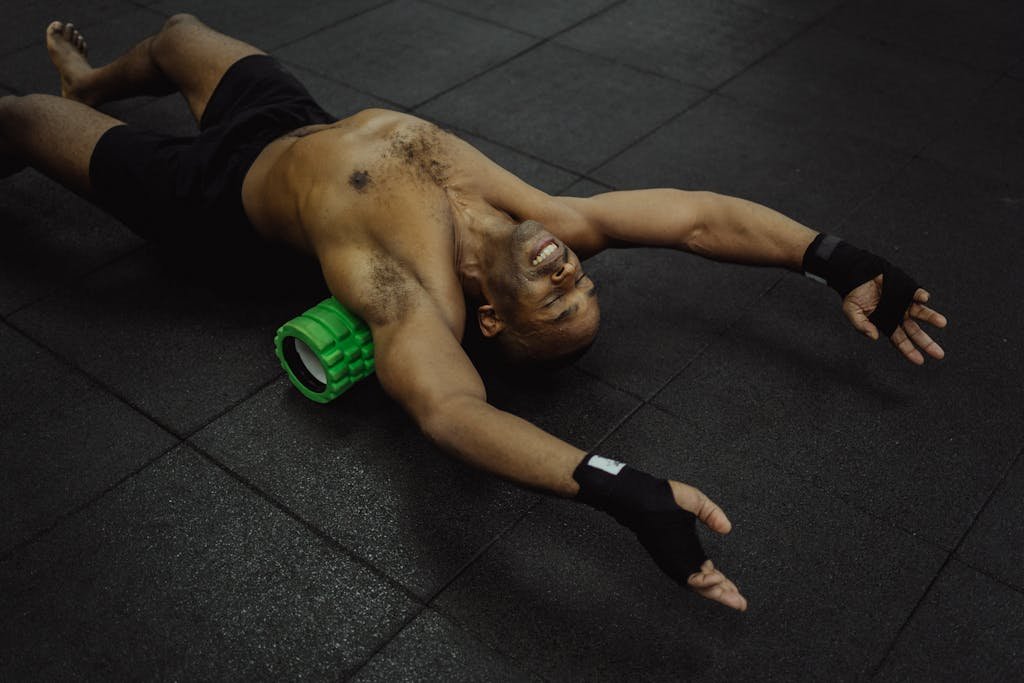
Textured rollers with raised patterns, ridges, or a grid design deliver more targeted pressure to specific areas of muscle tissue. The varied surface mimics the feel of a massage therapist’s fingers working into muscle tissue. More effective for experienced users who have adapted to rolling and want deeper tissue work.
Vibrating Foam Rollers — Best for Advanced Users
Vibrating foam rollers add percussive vibration to the pressure of rolling, producing acute improvements in flexibility and pain reduction that exceed those of standard rolling in head-to-head studies. The vibration activates mechanoreceptors that modulate pain perception and muscle tension more effectively than pressure alone. They are significantly more expensive but represent a genuine upgrade in effectiveness for regular users.
Short / Travel Rollers
Compact rollers (approximately 30cm) are useful for travel, targeted area work, and smaller muscle groups. Less practical for the IT band, thoracic spine, and hamstrings where a full-length roller provides better leverage and coverage.
Peanut / Double Ball Rollers
Two balls fused together that straddle the spine — ideal for thoracic spine mobility and paraspinal muscle rolling without the risk of direct spinal compression. Particularly useful for desk workers and runners dealing with upper back stiffness.
Best Foam Rollers at Every Price Point
Best Budget — AmazonBasics High-Density Foam Roller
A dense, smooth foam roller that does exactly what a foam roller is supposed to do. No frills, good durability, available in multiple lengths, and at a price point where there is no excuse not to own one. Ideal for beginners and those who want a simple, reliable tool without paying for features they don’t need.
👉 Search High Density Foam Rollers on Amazon
Best Mid-Range — TriggerPoint GRID Foam Roller
The TriggerPoint GRID is the benchmark mid-range foam roller and one of the most widely used by physiotherapists and athletic trainers. Its patented multi-density surface — varying zones of firmness across the roller — delivers more targeted tissue work than smooth rollers while remaining manageable for most users. Hollow core construction means it maintains its shape under heavy use. Comes with online instructional content. Excellent value at its price point.
👉 Search TriggerPoint GRID on Amazon
Best Vibrating — Hyperice Vyper 3
The Hyperice Vyper is the leading vibrating foam roller and genuinely outperforms standard rollers in studies measuring flexibility gains and soreness reduction. Three vibration settings, 2-hour battery life, and a firm textured surface that works effectively both with and without vibration. Expensive but the vibration adds measurable benefit over standard rolling — worth the investment for people who train regularly and take recovery seriously.
👉 Search Hyperice Vyper on Amazon
Best for Travel — LuxFit Premium Compact Foam Roller
A high-density compact roller (30cm) that fits in most gym bags and luggage. Does not have the full-body coverage of a standard roller but covers the most commonly needed areas — calves, IT band, upper back — adequately. Good for maintaining a rolling habit when away from home.
👉 Search Compact Foam Rollers on Amazon
Best for Back — Peanut Double Lacrosse Ball Roller
For thoracic spine mobility and paraspinal muscle work specifically, a peanut-shaped double ball roller is more effective and safer than a standard foam roller. The gap between the two balls straddles the spine, delivering pressure to the muscles on either side without compressing vertebral structures. Excellent for desk workers, drivers, and anyone with chronic upper back tension.
👉 Search Peanut Roller for Back on Amazon
How to Foam Roll Effectively
- Speed: Roll slowly — approximately 2–3cm per second. Rushing over muscle tissue provides minimal benefit. Slow, sustained pressure is what produces tissue change
- Duration per area: 60–90 seconds per muscle group. Find tight or tender areas, pause on them for 10–20 seconds rather than rolling past them continuously
- Breathing: Breathe slowly and steadily. Holding your breath increases tension and reduces the neurological inhibition effect
- Before training: Use a smooth roller, lower pressure, 30–60 seconds per area to improve range of motion
- After training: Use a textured roller, more sustained pressure, 60–90 seconds per major muscle group worked
- What to avoid: Never roll directly on joints, the lower back, or the front of the neck. Avoid rolling over areas of acute injury, bruising, or inflammation
Quick Comparison
| Type | Best For | Price Range | Recommendation |
|---|---|---|---|
| Smooth foam roller | Beginners, general recovery | Budget | AmazonBasics High Density |
| Textured / grid roller | Intermediate users, targeted work | Mid-range | TriggerPoint GRID |
| Vibrating roller | Advanced users, maximum benefit | Premium | Hyperice Vyper 3 |
| Compact roller | Travel, gym bag | Budget | LuxFit Compact |
| Peanut roller | Thoracic spine, back mobility | Budget | Double lacrosse ball peanut |
Final Thoughts
The best foam roller for recovery is the one you use consistently. A budget smooth roller used daily beats an expensive vibrating roller used occasionally. Start with a high-density smooth roller and build the habit — upgrade to a textured or vibrating option once rolling is a consistent part of your post-training routine.
For the complete picture of evidence-based recovery beyond foam rolling, including nutrition, supplements, and recovery tools, see our injury and recovery guide and our massage gun buyers guide.
Disclosure: Peak Health Stack participates in the Amazon Associates programme. Purchases via our links may earn us a small commission at no extra cost to you. This content is informational only — consult a physiotherapist for specific injury guidance.