Magnesium vs Melatonin — Which Is Better for Sleep?
magnesium vs melatonin is one of the most useful searches someone can make before buying another supplement, because it usually means they are ready to act but unsure what is safe, worthwhile, or right for them. This guide gives you the practical, evidence-aware version: what matters, what to check first, what to avoid, and when a paid guide or tracker can save you from expensive guesswork.
Magnesium and melatonin are often thrown into the same sleep-supplement basket, but they are not doing the same job. Magnesium is more about relaxation, muscle tension and nervous-system support. Melatonin is a timing signal. Confusing those jobs is how people end up taking the wrong product at the wrong time.
Need the full step-by-step version?
Browse all Peak Health Stack guides for practical checklists, supplement timing plans, women’s health resources and evidence-based workbooks.
Evidence-Based Health Guides
Practical Health Guides for Smarter Supplement Choices
Browse evidence-based guides, workbooks and free resources for supplement timing, forms, nutrient gaps, women’s health, energy and everyday performance.
The Simple Difference
Melatonin tells the body that it is biological night. Magnesium does not set your body clock in the same way. It may support relaxation, sleep quality and muscle tension, especially when magnesium intake is low or stress is high.
That means the better choice depends on the problem. Trouble falling asleep after late screens and jet lag is different from waking tense at 3am after a stressful day.
When Magnesium Makes More Sense
Magnesium glycinate is often the gentlest sleep-focused form because glycine itself may support calmness. It is not a sedative hammer. The effect, when it helps, is usually subtle: easier winding down, less tension, better sleep quality, or easier return to sleep.
It is especially relevant for people with stress, muscle cramps, low dietary magnesium intake, high training load or evening tension.
- You feel physically tense at night.
- You train and recover poorly.
- You have low magnesium intake from food.
- You want a daily mineral rather than a sleep-timing hormone.
- You are sensitive to grogginess from sleep products.
When Melatonin Makes More Sense
Melatonin is more situational. It can be useful for jet lag, delayed sleep phase, shift-work timing problems or short-term schedule resets. It is not necessarily the best answer for general stress insomnia.
Dose and timing matter. More is not always better. If you are considering melatonin regularly, especially for children, pregnancy, breastfeeding, medication use or long-term use, get professional advice.
- Jet lag.
- Delayed sleep timing.
- Short-term body-clock reset.
- Shift-work schedule adjustment.
- Clinician-advised use.
What Most Sleep Supplement Articles Miss
The supplement is often not the real lever. Caffeine timing, alcohol, late meals, stress, inconsistent wake times, bedroom light and phone use can overpower both magnesium and melatonin.
This is where Peak Health Stack can build trust: tell the truth. A sleep supplement guide should include the boring levers because they are the levers that actually decide whether the supplement gets a fair chance.
Conversion Angle: Sell the System, Not the Pill
This post should point readers toward your sleep and supplement guides because the real solution is a routine. A person comparing magnesium and melatonin is usually close to buying, but they need confidence. Give them a framework first, then invite them to go deeper.
Your Peak Stack fits when the reader already takes multiple products and cannot tell what affects sleep.
The best sleep supplement is the one matched to the actual sleep problem. The second best is the one you stop taking when it does not help.
Track what is actually working.
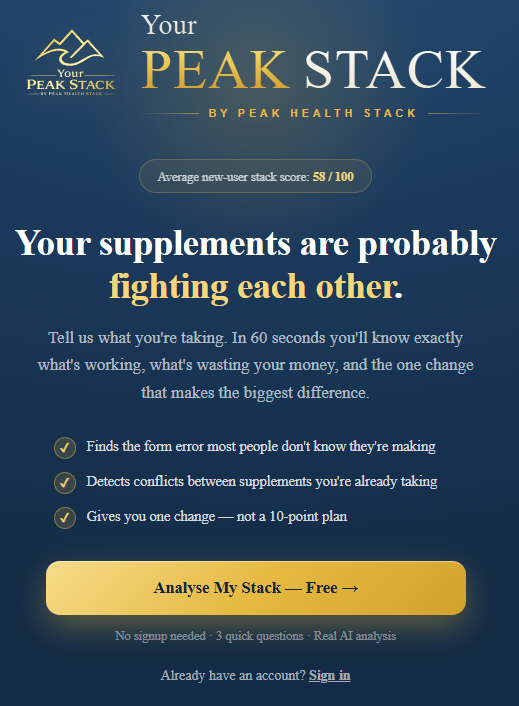
Your Peak Stack helps you log your supplements, timing, dose and daily symptoms so you can spot what helps, what clashes, and what may be wasted spend.

Stop Guessing. Start Tracking What Works.
Your Peak Stack helps you log your supplements, track how you actually feel, and get AI-powered guidance on what’s helping, what may be clashing, and what to adjust next.
Frequently Asked Questions
Can I take magnesium and melatonin together?
Some people do, but it is better to understand why you are taking each one. Check medication, pregnancy, breastfeeding and health conditions with a professional.
Is magnesium safer than melatonin?
They are different products with different cautions. Magnesium is a mineral, while melatonin is a hormone-like sleep timing signal. Suitability depends on the person and use case.
Which magnesium is best for sleep?
Magnesium glycinate is often preferred for sleep because it is usually well tolerated and gentle on digestion.
Final Thought
Magnesium and melatonin are not rivals. They are different tools. Pick the one that matches the sleep problem, fix the routine around it, and track whether it earns its place.
Build your health stack with less guesswork.
Visit the Peak Health Stack store for guides, workbooks and free resources built to help you choose better, track better and avoid wasting money.
Evidence-Based Health Guides
Practical Health Guides for Smarter Supplement Choices
Browse evidence-based guides, workbooks and free resources for supplement timing, forms, nutrient gaps, women’s health, energy and everyday performance.
Health note: this article is educational and is not medical advice. Speak with your GP, pharmacist, dietitian, or relevant clinician before starting supplements if you are pregnant, breastfeeding, taking medication, managing a condition, or considering iron, high-dose vitamin D, hormonal support, or multiple supplements at once.
Stop Guessing Which Supplements Are Actually Working.
Your Peak Stack helps you log your supplements, track how you feel, and get AI-powered guidance on what is helping, what may be clashing, and what to adjust next.