Baby Sleep Environment — The Complete Setup Guide for Better Sleep
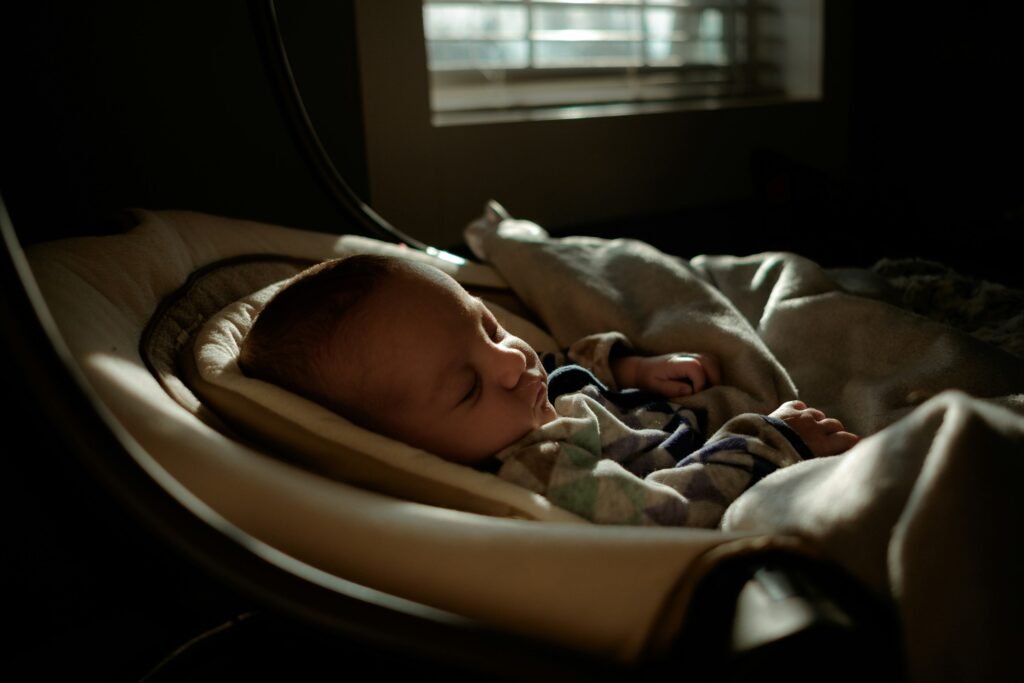
This guide to baby sleep environment covers what the evidence actually supports — with correct doses, realistic expectations, and the most important factors to consider. By Peak Health Stack | Last Updated: March 2026
The baby sleep environment (NHS safe sleep environment guidance) is one of the most powerful and most frequently underestimated factors in infant sleep quality. While settling techniques and sleep schedules get most of the attention, the physical environment in which your baby sleeps determines how easily they fall asleep, how deeply they sleep, and how often environmental triggers cause partial arousals to become full wake-ups. Getting the environment right is the foundation that makes everything else easier — and it requires far less ongoing effort than any settling technique.
The Three Non-Negotiable Environmental Factors
1. Darkness — The Highest-Impact Single Change
Light is the primary environmental regulator of melatonin production. The brain’s suprachiasmatic nucleus interprets light as a signal that it is daytime and suppresses melatonin accordingly. Even low-level ambient light — streetlight through thin curtains, a small nightlight, a monitor light — measurably suppresses melatonin and reduces deep sleep duration in babies as it does in adults.
Getting the baby sleep environment right is one of the highest-leverage sleep improvements available — and most of it is free.
For optimal baby sleep, the room should be genuinely dark — dark enough that you cannot see your hand clearly in front of your face once your eyes have adjusted. This applies to naps as well as night sleep. The common approach of keeping nap rooms bright to “teach baby the difference between day and night” is counterproductive — naps taken in darkness are consistently longer and more restorative than those in light rooms, because darkness supports the melatonin production that enables deep sleep cycles.
What to use:
A well-configured baby sleep environment reduces the external stimuli that interrupt the light sleep stages between cycles.
- Blackout blinds or curtains: The most effective permanent solution. Look for total blackout lining rather than “blackout effect” — many products marketed as blackout still allow light around edges. Measure your windows carefully and choose blinds that overlap the frame rather than fitting inside it
- Portable blackout blind: A travel blackout blind that attaches to windows with suction cups is invaluable for travel, staying with family, or rooms where permanent blinds aren’t practical. EasyBlinds and SnoozeShade make well-regarded options
👉 Search Blackout Blinds for Nursery on Amazon
👉 Search Portable Blackout Blinds on Amazon
2. Sound — White Noise Throughout the Entire Sleep
The womb is not quiet. A foetus at full term is surrounded by continuous sound — blood flow through the placenta registers at approximately 72–88 decibels, comparable to a vacuum cleaner in the same room. Newborns have spent nine months immersed in continuous sound and silence is the novel experience, not noise. This is why so many newborns who fuss in quiet rooms calm immediately when a fan is switched on or running water is audible nearby.
The baby sleep environment checklist — dark, cool, white noise, safe surface — takes minutes to set up and pays back in better sleep quality.
Beyond the womb-mimicking effect for newborns, continuous white noise serves a critical mechanical function throughout infancy and toddlerhood: it masks the variable environmental sounds — a door closing, traffic outside, a sibling, a dog — that cause partial arousals between sleep cycles to become full wake-ups. A baby who would otherwise wake four times per night from environmental sounds may sleep significantly more consolidated with continuous white noise providing acoustic coverage throughout the room.
Key principles for white noise use:
- Use continuous, non-looping sound — not music or lullabies that stop. The noise should run throughout the entire sleep period
- Volume should be audible throughout the room but not loud — approximately 50–55 decibels, roughly the level of a quiet shower heard from the next room
- Place the machine across the room from the cot — not directly beside the baby’s head
- True white noise, pink noise, or brown noise are all appropriate. Avoid sounds with variable volume or rhythm which can become stimulating
👉 Search White Noise Machines on Amazon
3. Temperature — 16–20°C Is the Safe and Optimal Range
Room temperature directly affects both sleep quality and safety. The recommended safe sleep temperature range is 16–20°C. Overheating is an independent risk factor for SIDS and a significant cause of night waking — an overheated baby will wake from discomfort even in an otherwise optimal sleep environment. An overly cold room causes similar disruption from the opposite direction.
A room thermometer is an inexpensive and essential nursery item. Dress your baby for the room temperature using a tog-rated sleep bag rather than trying to manage temperature through blankets — sleep bags provide consistent, safe warmth regardless of how much the baby moves during sleep.
Tog ratings for sleep bags:
- 0.5 tog — for room temperatures of 24–27°C
- 1.0 tog — for room temperatures of 21–23°C
- 2.5 tog — for room temperatures of 16–20°C
👉 Search Baby Room Thermometers on Amazon
👉 Search Baby Sleep Bags on Amazon
The Sleep Surface — Safety and Comfort
Following safe sleep guidelines for the sleep surface is non-negotiable. The current evidence-based guidance from the NHS, American Academy of Pediatrics, and equivalent organisations worldwide specifies:
- Firm, flat mattress: No memory foam, no inclined surfaces, no pillow-top. The mattress should be firm enough that it does not contour to the baby’s face if they turn. A new, clean mattress is recommended for each baby
- Fitted sheet only: No pillows, no loose blankets, no bumpers, no positioning aids in the cot. The cot should be empty apart from the baby and a fitted sheet
- Back to sleep: Always place babies on their back to sleep until they can roll independently in both directions
- Room-sharing for minimum six months: The baby’s sleep surface in your bedroom is recommended for the first six months minimum — not bed-sharing, but room-sharing with a separate sleep surface
👉 Search Baby Cot Mattresses on Amazon
Additional Environment Optimisations Worth Considering
Baby Monitor
A reliable baby monitor allows you to respond quickly to genuine waking without constant physical presence in the room — supporting the gradual transition to a separate sleep space while maintaining appropriate oversight. Video monitors provide additional reassurance and allow you to assess whether a noise is a genuine wake-up or a brief self-settling sound before entering the room unnecessarily.
👉 Search Baby Video Monitors on Amazon
Nightlight for Night Feeds
A dim, warm-toned (amber/red spectrum) nightlight for night feeds and nappy changes keeps the environment dark enough to avoid full brain activation while providing sufficient visibility to care for your baby safely. Avoid white or blue-spectrum lights at night which suppress melatonin production in both you and your baby. A clip-on book light pointed away from the baby works well as a minimal intervention.
👉 Search Amber Nightlights for Nursery on Amazon
Swaddle or Sleep Bag (Age-Dependent)
For newborns up to approximately 3–4 months (until rolling begins), swaddling suppresses the Moro startle reflex that wakes babies during light sleep phases and provides the snug containment that is calming for young infants. Once rolling begins, transition to an arms-out swaddle and then a sleep bag. For babies over 4 months, a well-fitted tog-rated sleep bag replaces both swaddle and blanket for the rest of infancy and toddlerhood.
👉 Search Baby Swaddles on Amazon
The Complete Baby Sleep Environment Checklist
| Element | Target Standard | Product Solution |
|---|---|---|
| Darkness | Total blackout — cannot see hand in front of face | Blackout blinds or curtains |
| Sound | Continuous white/pink/brown noise, ~50dB, all sleep | White noise machine |
| Temperature | 16–20°C throughout sleep period | Room thermometer + tog-rated sleep bag |
| Sleep surface | Firm, flat, fitted sheet only — no soft items | Quality firm cot mattress |
| Sleep position | Back to sleep until rolling both ways independently | — |
| Night feed lighting | Amber/red spectrum only, dim | Amber nightlight or clip light |
| Monitoring | Reliable audio or video monitor | Baby video monitor |
How the Environment Connects to Sleep Training
Even the best sleep settling approach produces limited results in a poor sleep environment. Babies whose rooms are too bright, too warm, or too variable in sound levels wake more frequently, settle more slowly, and consolidate sleep less effectively — regardless of what settling technique their parents use. Getting the environment right first is the prerequisite for any sleep coaching approach to work at its full potential.
For the complete guide to helping your baby sleep longer and settle independently, see our Complete Baby and Toddler Sleep Blueprint (available on Amazon, Gumroad, Etsy & Payhip) which covers environment, schedules, settling techniques, and regression management in one structured resource.
Final Thoughts
The baby sleep environment is the foundation that every other element of infant sleep sits on. Genuine darkness, continuous white noise, appropriate temperature, and a safe firm sleep surface are not optional extras — they are the conditions under which babies sleep most naturally and most deeply. Getting these right before attempting any schedule or settling approach produces dramatically better outcomes with significantly less effort.
Many parents who struggle with infant sleep for months discover that addressing the environment alone — particularly installing proper blackout blinds and adding white noise — produces immediate and significant improvement without any change to their settling approach.
This article follows current NHS and AAP safe sleep guidelines as of March 2026. Always consult your midwife, health visitor, or GP if you have specific concerns about your baby’s sleep safety or development.
Related Guides on Peak Health Stack
Related Articles
- White Noise for Babies — Does It Actually Help?
- How to Get Your Baby to Sleep Through the Night
- Baby Sleep Schedule by Age — Complete Month by Month Guide
- 4 Month Sleep Regression — What’s Happening and How to Survive It
- Newborn Sleep Tips — What Actually Helps in the First 12 Weeks

Stop Guessing Which Supplements Are Actually Working.
Your Peak Stack helps you log your supplements, track how you feel, and get AI-powered guidance on what is helping, what may be clashing, and what to adjust next.